
Brands & Branding
A collection of marketing articles inspired by news, events and happenings. A view of the world through a marketers lens, drawing branding lessons from everyday occurrences and observations.
E.Q. | Brands that Tugged at Your Heart
AI AI YO! Living Guilt Free with AI

Why Marketers and Professionals Should Embrace, Not Fear, Artificial Intelligence in Their Creative Processes
At the outset and on a lighter note, let me clarify I have not suddenly decided to call upon my South-Indian roots for creating the title. The expression “AI AI YO” is however inspired by this much propagated tripe – a caricatured representation of exasperation by a typical South-India character in Hindi movies. Having established that there is a need to reframe narratives. Let’s speak about AI.
The Era of Guilt-Free AI: Reframing the Narrative
For decades, technological innovation has marched hand in hand with professional creativity. From the printing press to Photoshop, each new tool has sparked debate and, sometimes, unease: Does this diminish my own effort? Does it erode the authenticity of my work? Today, with the proliferation of artificial intelligence (AI), these questions have echoed louder than ever, especially among marketers and other professionals whose work is rooted in communication, creativity, and strategy.
AI is transforming how presentations are built, scripts are drafted, videos are produced, and graphics are designed. Yet, a surprising undertone of guilt persists—an internalized doubt that using AI somehow cheapens the value of one’s work. This article makes a bold case: Marketers, and indeed all professionals, should not feel ashamed of using AI. Instead, they should embrace it as the latest in a long line of tools designed to amplify, not replace, human ingenuity.
AI as a Tool, Not a Threat
Reframing Perception: From Magic to Machinery
The core of the AI guilt complex lies in a misunderstanding of what AI actually is. It is not a mystical replacement for human talent, nor is it a shortcut that undermines authenticity. At its most fundamental, AI is a tool—sophisticated, yes, but a tool nonetheless.
Consider the spell-checker: When it first appeared, some purists scoffed, suggesting it would erode spelling skills and diminish the art of careful proofreading. Yet today, no writer feels guilty for running a spell-check before hitting “Send.” The same applies to internet search engines, which democratized access to information, or to digital cameras, which made photography more accessible.
AI is no different. It is a tool that, when used wisely, expands the scope of what’s possible. The shame comes not from the tool itself, but from a misplaced belief that using it somehow discredits the creator’s contribution.
Historical Parallels: Every Tool Once Felt Like “Cheating”
It’s helpful to remember that every technological leap in history was accompanied by a chorus of doubts. When calculators entered classrooms, some educators worried that students would lose the ability to calculate mentally—yet calculators freed minds for deeper, more complex problem-solving. When search engines redefined research, did it make scholars “less scholarly”? Of course not. It expanded their reach and accelerated their progress.
AI joins this lineage. It is the spell-check of structure and style, the search engine of synthesis and insight. It is not a destination; it is the vehicle on the journey from concept to creation.
The Marketer’s Dilemma: Authenticity vs. Automation
The Fear of “Losing One’s Voice”
For marketers, the anxiety about AI can be especially acute. Marketing is, at its heart, about connection—about telling stories that move audiences, spark action, and build relationships. The fear is that AI, with its data-driven logic, will produce content that is soulless, generic, or disconnected from the authentic voice of the brand.
But this fear is misplaced. AI does not think for you—it only thinks with you. It is a collaborator, not a ghostwriter.
Iterative Interaction: AI as Creative Partner
The best results come not from blindly accepting AI’s first output, but from engaging with it iteratively. The professional reviews, refines, and reimagines what AI delivers—injecting nuance, insight, and personality. AI can propose a bullet-point outline for a product launch, but only the marketer can adapt it to reflect the brand’s personality, market context, and audience needs.
This human-AI loop ensures the end product is both efficient and effective—saving time on mundane tasks and leaving space for the uniquely human touch.
AI in Practice: Enhancing Every Stage of the Creative Cycle
Presentations: From Blank Slides to Compelling Narratives
Anyone who’s stared at a blank PowerPoint knows the agony of beginning. AI can break the ice—generating frameworks, suggesting data visualizations, and even drafting talking points. But the professional curates, edits, and polishes, ensuring the final presentation is persuasive, purposeful, and on-brand.
Scripts and Content: Drafts that Spark, Not Replace, Creativity
Whether scripting a commercial, drafting an email campaign, or outlining a webinar, AI can generate first drafts that save hours of effort. But these drafts are starting points. The marketer adapts language, tunes messaging, and adds the emotional resonance that only a human can provide.
Video Production and Graphics: Lowering Barriers, Not Standards
AI-powered video and graphic tools democratize high-quality content creation, especially for small teams or solo professionals. AI can automate editing, suggest color palettes, or even generate animations. But vision and intent come from the creator. The professional uses AI as a brush, not a blueprint.
AI and Human Involvement: The Necessity of Intervention
Guardrails and Guidance
AI is only as good as the hands that guide it. Blind automation leads to generic, unremarkable output. Wise use, on the other hand, means setting clear goals, asking the right questions, and editing with intention. AI accelerates the “grunt work,” but judgment, values, and vision remain human responsibilities.
This interplay is especially vital in marketing, where context, emotion, and cultural relevance drive results. AI learns from patterns, but humans recognize meaning. The magic happens at the intersection.
Ethics and Accountability
Another reason for human involvement is ethics. AI can inadvertently perpetuate biases or misinterpret sensitive topics. Professionals must review, refine, and take responsibility for the final product. This accountability is the hallmark of good practice—regardless of the tool used.
Shedding the Stigma: Guilt-Free AI Adoption
Transparency and Professional Pride
There’s no shame in using AI—only shame in failing to use it wisely. Transparency is key. Just as writers acknowledge spell-check or researchers cite search engines, professionals should feel free to disclose their use of AI. In fact, this openness can foster trust, demonstrating a commitment to quality and efficiency.
Skill, Not Substitution
Using AI does not diminish professional skill; it demands new skills. Marketers and professionals must learn to ask better questions, interpret nuanced answers, and curate large volumes of information. AI elevates the role of the professional from laborer to orchestrator.
Looking Forward: The Empowered Professional
Efficiency Meets Effectiveness
When marketers and professionals embrace AI without guilt, they unlock unprecedented efficiency. Routine, repetitive tasks—research, formatting, basic drafting—are handled in moments, freeing time for strategic thinking. AI augments capabilities, enabling individuals and teams to do more, faster, and at a higher level of quality.
Endless Opportunity for Innovation
Far from stifling creativity, AI creates new opportunities for experimentation. Marketers can rapidly prototype campaigns, test messaging, and personalize content at scale. Professionals in other fields—law, healthcare, education, engineering—can automate routine work and focus on impact.
A Human-Centric Future
The greatest promise of AI is not that it replaces humans, but that it empowers them. The professional of the future is not the one who shuns technology, but the one who integrates it thoughtfully into their craft. This is not surrendering creativity; it is amplifying it.
Conclusion: Embracing the Guilt-Free Creative Future
AI is, and always will be, a tool. Like every tool that came before it, AI’s value lies in how it’s used—not in what it threatens to replace. Marketers and professionals should view AI as they do spell-check or search engines: an enabler, not an eraser, of human creativity.
By embracing iterative interaction and maintaining appropriate human involvement and intervention, professionals can ensure their work is not only efficient, but also effective, relatable, and authentic. Those who harness AI wisely will lead the way to a future where creativity knows no bounds—and where guilt has no place.
The future is brighter, more efficient, and more imaginative than ever.
So, use AI—freely, proudly, and without an ounce of shame. This is the time for AI AI YOU! The world is waiting for what you’ll create next.
PS & DISCLAIMER:
This article has been drafted & created with the help of AI. Now does that sound like something I have written about, and you have read before? Good luck figuring it out. Either way, I still have undeniable IP rights on this content. Do leave your thoughts in the comments or DM.
A Bridge Across India(s)
Marketing beyond the Demographic and Psychographic Divide
Context:
I recently read three articles in one of the newspapers. One that spoke about the income disparity that exists in India and if I may add, one that is widening. Combined with another article they tried to make sense of the income classes in India. A third article a few days later, gave data pertaining to education and economic affluence. Leaving the socialist aspects aside, the averages as usual by themselves are misleading and deceptive.
Exhibit A:
According to a statistic (source or basis not explicitly mentioned by the report) an income of Rs2.9Lakhs per annum puts one into the Top 10% earners and to enter the Top 1% an income of Rs.20.7Lakhs per annum shall suffice. However, to get into the Top 0.1% you need an annual income of Rs.2.25Crores. The comparable numbers in terms of accumulated wealth or net assets for these brackets are Rs.21Lakhs and Rs.82Lakhs for the Top 10% and Top 1% respectively.
Exhibit B:
The associated article in the same newspaper quoted data from 2 reports namely the Indus Valley Report 2025 and the Knight Frank Wealth Report 2025. The Indus Valley Report proposes the concept of 3 Indias based on income categories
- India 1 – Representing the wealthiest 10% of the population who have a per capita income of USD15000 (Rs12.8Lakhs) comprising of approximately 30MN households
- India 2 – 23% of population with per capita income of USD3000 (Rs.2.5Lakhs); ~70MN households
- India 3 – 67% of population with per capita income of USD1000 (Rs.85Thousand); ~200MN households
Exhibit C:
The third article looked at the social caste construct and how it impacted education levels. Education it opined and I agree is perhaps the biggest factor in inter-generational upward mobility. The article also referred to data gathered by the NSSO.
Premise:
Looking at these numbers set the marketer in me thinking about what lies beyond these income/wealth numbers and how we as a tribe use the demographic data for creating/defining our target audiences. The thought then led to a further reading and assimilation of data from a wider range of articles and reports.
What also found its way into my thinking were my recent experiences with studying Consumer Archetypes and my interactions with a vast set of consumers trying to understand their aspirations and motivations.
While by no means exhaustive or even pretending to be scholarly my notes as I made them threw up a pattern that potentially can serve as a de facto framework for marketing to Indian consumers based on 3 broad dimensions:
- Geographic
- Economic and
- Psychographic
A combination of these dimensions help us understand the 4As namely Availability, Affordability, Accessibility and Acceptability of Products and Services that we marketers aim to influence and promote.
Marketing is essential for raising awareness, building trust, and encouraging the use of services and products.
From the point of view of the Geographic Divide i.e. Urban and Rural, inclusive marketing involves more than just targeting rural audiences—it requires a thoughtful understanding of their distinct challenges and cultural backgrounds to create meaningful connections and promote the adoption.

Nielsen reports provide important insights into overall consumer trends, spending patterns, and the key role affordability plays in shaping consumer behavior across different groups. With much of India’s economic activity and spending power concentrated in urban areas, a targeted approach is essential to effectively understand and engage rural markets through customized marketing strategies.
- Rural consumers are generally more price-sensitive and favor local brands that meet their needs and budget.
- Urban consumers are more brand-conscious and are influenced by national/international brands and media trends.
- Rural families are often larger, with centralized decision-making by one person.
- Urban families are usually smaller and nuclear, with shared decision-making between male and female members.
On the Economic dimension, the narrowing of the consumption – expenditure gap between urban and rural areas, coupled with the increasing inclination towards non-food items in rural spending, signifies an expanding market with evolving needs and preferences. Marketers who recognize this burgeoning potential and tailor their offerings to meet these specific demands are poised for success.
Fueled by rising income levels and various government support initiatives, the purchasing power of rural consumers is on an upward trajectory.
Growing access whether in terms of transport infrastructure paving access to higher order necessities such as health, education or to information and awareness courtesy the digital access that the penetration of mobile phones and internet have meant higher aspirations.
Believe it or not the axis, however low it might have been has considerably shifted up and right over the last 2 decades. Therefore, understanding the Psychographic aspect of the change is an imperative. Unfortunately, as old school as I may sound, data alone cannot get marketers across the line.
There is no substitute to first hand exposure to the consumer. A marketer worth her salt cannot, dare I say should not compromise on living a day in the life of the consumer(s) they aspire to market to. Multiple times over, if need be.
Bridging the demographic and the psychographic divide in India necessitates a strategic and sustained commitment to understanding and effectively serving the unique needs of different archetypal consumer profiles that emerge based on the dimensions and factors outlined.
Archetypes
Debatable as they may (and intentionally so) the broad archetypes that emerged according to my notes are as below:

The Rulers
The prime movers and shakers if not already who-is-who these are folks who are heading there or at the very least striving to. They are setting trends and shaping narratives – social, political and economic as they go along. The Rulers are the HAVES.

The Controllers
They are the country cousins of the archetype just above. They have POWER and do not hesitate to wield it. They are always in-step or at worst one behind with what is current and trending. Social superiority is essential. The Controllers are the MUST HAVES.

The Aspirers
Their trajectory is pointing upwards and their ambitions are keeping it there. They have SKILL and KNOWLEDGE to get where they want to. They are the difference between a fad and trend! They are the WANTS.

The Dreamers
They are doing well for themselves though things could always be better. The dreamers are happy with the fact that it is possible for them to be better. However, ambition takes back seat for sentimental reasons or contentment or pragmatism. They are the COULD BES’.

The Warriors
They are inching towards a better life for themselves. Every day is a battle they fight and WIN. Bruised and battered they may be but they wear their battle scars with pride. Making ends meet is not the goal it is something they have to do to get to it. The Warriors are a tribe that is armed with a can do spirit but they are the MUST DOS’.

The Survivors
They have limitations, severe ones. The absence of privilege of any sort is what defines them. Yes, they depend on others but that is just the cards they have been dealt. There is a desire to change their future and rid themselves of the baggage of the past (socio-economic). They are the NEEDS.
3×2 India Framework
This proposal based on a top-level analysis of consumer psychographics and consumption patterns unveils distinct differences between urban and rural populations across the economic divide. The image that follows tries to give context to the archetypes on 2 axes based on Geographic and Financial. This placement of consumer types in context underlines the need for tailored marketing strategies across the archetypes.

Key strategies for success include prioritizing localized product offerings and pricing, building robust distribution networks that penetrate remote areas, utilizing local languages and culturally relevant messaging, and fostering trust through transparency and community engagement.
Conclusion
The increasing reach of digital platforms presents significant opportunities, but addressing the challenges of connectivity and digital literacy requires a hybrid approach that integrates digital outreach with strong community-based initiatives.
There are some useful and celebrated case studies in the form of Project Shakti and e-Choupal that demonstrate that a deep understanding of the local context and a willingness to adapt strategies are fundamental to achieving meaningful impact in rural India. However, these need to be perhaps revisited through the lens of economic disparities too.
Ultimately, bridging the divide requires a long-term commitment from businesses in general and more specifically marketers along with other stakeholders to create a more inclusive and holistic marketing construct that speaks to all consumer types.
Ready?!
Going DIGITAL / Talking GREEN ?

Are you as a brand or business or communicator doing the same? Well here’s a thought. Going digital alone may not be as green as you think or have been led to believe it is.
Do not get me wrong, marketing work-flow automation, digitization, etc. are a step in the right direction. However, their “greenness” may be getting over-stated when it comes to a marketing context and conscience. Marketers across organisations tend to add the green tag to all or any such initiative that they take without a holistic understanding of the carbon cost of such an exercise.
This overtly simplified rationale of digital = no paper = green may be where most marketers stake claim to green. This conventional wisdom approach was good enough two or may be three decades ago when “paperless office” was a buzz word.
RIGHT NOW is the time for the marketing tribe to step its game up and make green tangible.
I have seen EV cab operators give CO2 or Trees equivalent in their apps to make consumers aware of the impact of their choice(s). Utility companies moved from paper bills to e-mails. Many of the solar rooftop installation players too are using this ploy. The question though is, how much of it does a consumer really comprehend?
Yes paper bill to email was a timely step but who is making you aware of the green cost of the email? There is a green cost every time we search, browse, scroll, play or transact digitally.
The heart of the digital world lies in data centers. These facilities, housing servers that store, process, and disseminate data, are massive consumers of electricity. Firstly, they power the servers themselves, and secondly, they require extensive cooling systems to prevent overheating. Estimates vary, but studies suggest data centers collectively consume approximate 340TWh or 1-2% of global electricity.
A single data center often can consume the equivalent electricity of 50,000 homes.
Here are some assorted data points intended as food for thought:
Email: A single, simple text email has a small footprint (estimated around 4g CO2e), emails with large attachments can increase this significantly (up to 50g CO2e or more). The sheer volume – estimated at over 347 billion emails sent daily in 2023 (Statista, 2023) – means the cumulative impact is substantial. Furthermore, “spam” emails, which constitute a large percentage of traffic, represent wasted energy for processing and storage.
Digital Transactions: Financial transactions, online banking, and cryptocurrency mining require processing power and network usage. While a digital transaction is often more energy-efficient than a physical bank visit, the scale is immense. Cryptocurrency mining, in particular, is notoriously energy-intensive, with Bitcoin’s network alone consuming energy comparable to entire countries.
Social Media & Streaming: These platforms are particularly data-heavy. Streaming video accounts for a vast portion of internet traffic – estimates often place it around 60-80% of total downstream volume (Sandvine Global Internet Phenomena Report). High-resolution video streaming, scrolling through image-laden social media feeds (like Instagram, TikTok, Facebook), and video conferencing all require constant data transfer and processing, demanding significant energy from data centers and network infrastructure.
According to Meta’s own report on sustainability the net emissions were CO2 equivalent 7.5 million tons in 2023.
Aside to compliance led, mandatory or responsible reporting by global majors, the brands of today going forward need to help their consumers make informed choices in the context of today. This means making green-speak colloquial. Making impact relatable, tangible and in classic marketing sense rewarding.
Whether consumption patterns actually change if people were indeed made aware of the green cost of watching a season, placing an order on the internet, time spent on social media is debatable but given the dire state of our planet surely worth an effort.
As marketers, we can surely be conscientious about the next reel we create for our brand or the next e-mail that get’s triggered or notification we serve for a cart action.
Ready?
Brand Supernovas (2025)

How many times have brands or companies simply be-dazzled you with their products, communication, pace of innovation, service delivery etc. and then suddenly dropped off the planet?
Not often, but I bet most of us would come up with an example or two.
Got thinking on similar lines and tried racking my brains to come up with a list my own. Funny thing with lists though is that you want the number of items on it to reach a nice round figure. What I figured was; whatever number that you can get to without stretching the core thought is probably the right number to have on the list. I am sure you nodded your head to that one.
Before I started writing this post I looked up the term “Supernova” in the dictionary
su·per·no·va (so͞o′pər-nō′və)
A rare celestial phenomenon involving the explosion of a star and resulting in an extremely bright, short-lived object that emits vast amounts of energy. Depending on the type of supernova, the explosion may completely destroy the star, or the stellar core may survive to become a neutron star.
I have for the purpose of this post highlighted what I believe are the operative parts.
Before I go on to cite examples let me establish the basic premise which is, a successful brand is the coming together of a great product or service and communication that resonates with the consumer leading to a distinctive identity, a marked preference and a position of leadership. Now, that’s an elevator pitch definition of brand success that covers most if not all bases.
Now brands fade for a variety of reasons and hundreds go into oblivion every day. Mostly because they didn’t deliver on the promise that they made. Reasons could be they stopped being relevant or they got complacent or they were poorly managed etc. The very opposite at one time or the other must have got them to the top. It is however important to make a distinction between brand supernovas and brand fads.
Brand supernovas are the ones that seemed to have got it right. Well at least for a while.
Now for the examples. Here are brands that shot up high and lit up the horizon while they were at it. Almost all these brands had a great product/service idea that went down extremely well with consumers, customers and investors. Not all of them spent big bucks on advertising and communication but they sure captured more than a fair share of imagination – to the extent that nobody imagined them going bust or fading away into oblivion.
- Fitbit – a pioneer in the wearables/fitness tracking space that rose to a dominant 37% market share and over USD10BN in market cap after going public in 2015. The heady success though didn’t last as Fitbit failed to sustain it’s first mover advantage. Wearables as a category saw a significant shift with brands like Apple upping their game. Fitbit’s revenue started to decline after 2016, and their market share also decreased considerably. Despite an initial high valuation, their brand value also saw a downward trend, eventually leading to their acquisition by Google in 2021. Google too sunset the brand soon after.
- PepperTap – Launched in 2014, India’s early attempt at quick commerce premised on a hyper-local /aggregation/commission based delivery model chalked up millions of subscribers and users as also millions of dollars in initial funding. To its credit, PepperTap had a fantastically simple and seamless user experience and some good algorithms to get the logistics right. However, a combination (arguably) of a misplaced sense of urgency wrt to expansion and heavy discounting saw the brand/company falter and lose its way. The fame and the glory were short-lived. By April 2016 PepperTap management had to announce a shut-down of it’s consumer facing operations. Subsequent attempts at revival in a B2B avatar too failed.
- Koo – Touted as India’s multi-lingual answer to X (erstwhile Twitter) this was a brand that lived only long enough to disappoint. The reason I mention Koo is that it reached a whopping 60MN users at it’s peak – no small achievement. Birthed at a time when India’s Nationalist sentiment was at it’s peak and perhaps helped along by an over-enthusiastic media response Koo did have something novel to offer to its users initially.
There of course are several other brands in the past decade that began their journey and met with great success. Some continue to grow, expand and flourish whilst some have run into some rough weather.
Some of the brands that spring to mind are Snapdeal, Groupon, Yumist which burnt bright for a brief while. Yet others such as Byju’s and WeWork on which the jury is still out.
Brand New Resolutions MMXXIV
I know, I know. Resolutions are passé. Nonetheless, I had to vent these thoughts that had been bubbling in my mind for the past few days and what better a way than to write a blog post. Since it was that time of the year I just decided to go ahead and put them in the form of an ancient ABVS tradition.
Without much further ado, let us jump right into my proposed Resolutions for Brands in 2024.
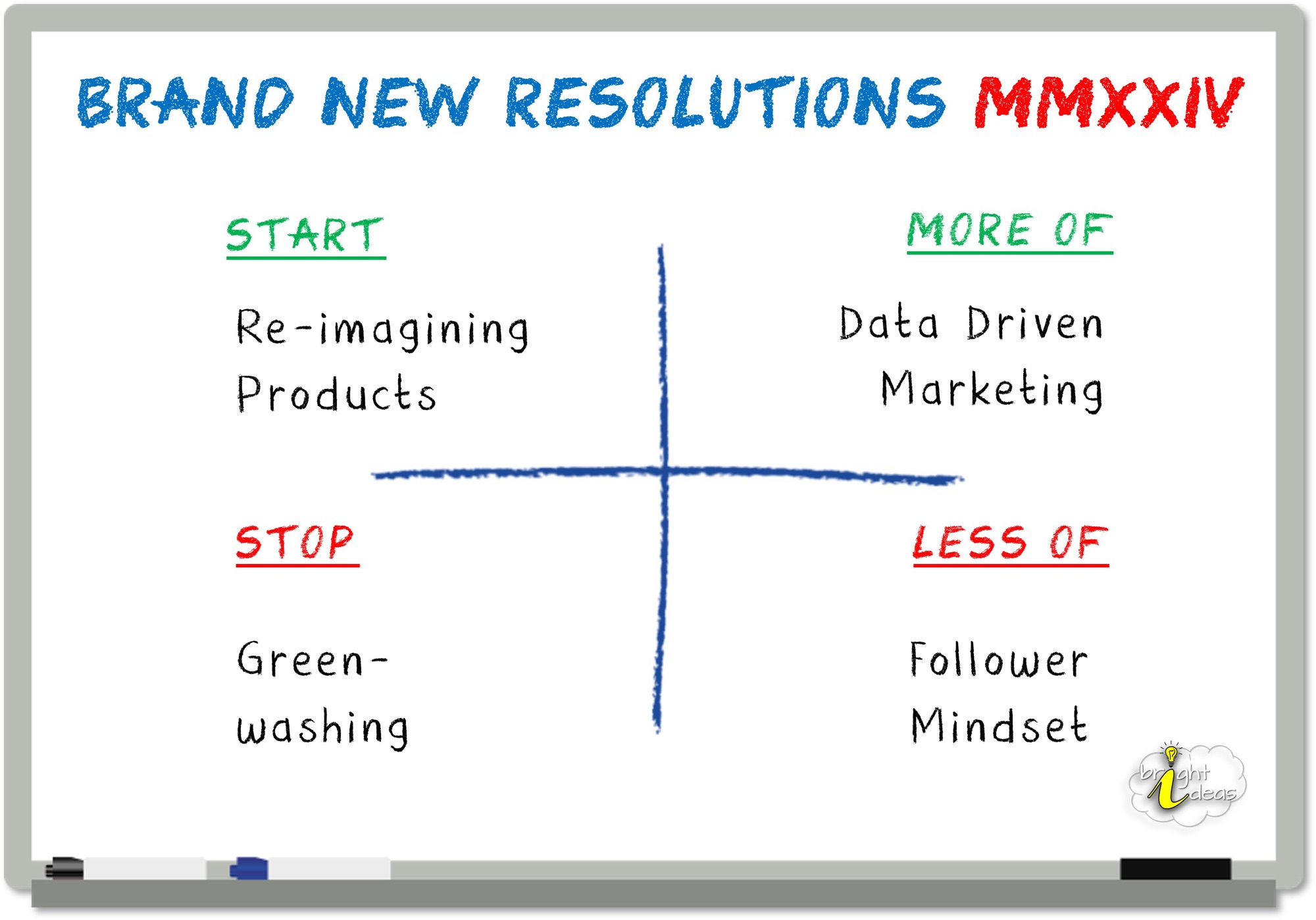
START | Re-imagining Products (&Solutions)
Enough and more has been written, discussed, and debated about how consumer and customer behaviour has seen a paradigm shift post-pandemic. That said, how many brands have re-thought or re-designed or re-organized their offering on account of this change? Not many one would reckon.
All of us acknowledge that it is a more connected world than it was pre-COVID19. Not because the technology was not available but because the adoption of technology had not happened. The pause in commerce in the 2 years of lockdowns has accelerated adoption journeys and tech roadmaps.
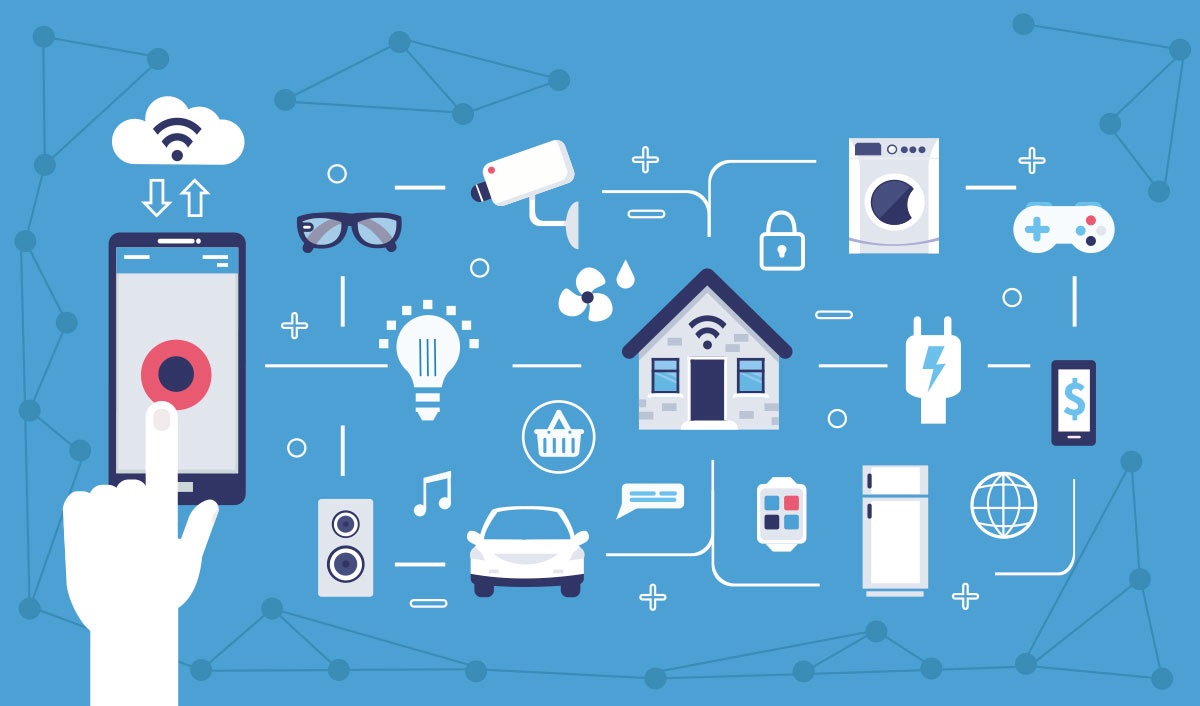
Therefore, in an IoT led world with AI making headlines and some real headway, dumb products without connectivity and with little or no user interaction are setting themselves up for failure if not extinction. Brands and more specifically Product Managers need to look hard at the JOB TO BE DONE and introduce some level of intelligence and interactivity in their offerings. The trap to avoid though is it being a lip-service or a gimmick.
STOP | Green-washing
Consumers today are more discerning. Only the brands GENUINELY integrating SUSTAINABLE in their narrative shall be able to or shall we say allowed to reap the rewards. Overtly simple methods of the last century such as using adjectives such as “Natural”, “Organic”, “Traditional” in communication will not work. It’s not just the offering but also the value proposition that needs to be sustained (sustainable).
Yes, there is a consumer who is willing to pay a premium for sustainably produced/sourced/managed products and solutions but that does not mean brands have a birthright to a higher price-point.
All brands sooner or later will need to spell out their vision and sustainability goals. Whether from a compliance perspective or from a consumer preference perspective or a market valuation perspective, brands shall be compelled to share their sustainability dashboards.
MORE OF | Data-driven Marketing
The downside of the social era has been that brands have started to confuse conversations with/ feedback from consumers with primary research, analysis, and culling insight. All marketers do understand that the Voice of Consumer is the starting point not the point itself. It is imperative that brands plan for and ensure that a strong understanding of the consumer/user continues to be the basis for creating products or solving problems.

Any understanding of the market that is built on data, reports and research is paramount and should take precedence over anecdotal evidence.
Research aside, consumer immersion is hygiene and brands should mandate this for their team. Every minute spent observing consumers in their setting is invaluable.
Many of my past colleagues at Nokia have (at that point in time very grudgingly) spent tens if not hundreds of hours in consumer visits. The repository of consumer understanding that the exercises built is something that I am sure all of us bank on till date – it is become the part that has honed our marketing intuition.
LESS OF | Follower Mindset
This is a pet-peeve. Also a sign of a lazy marketing organization. If something has worked for Brand A it is not necessary for Brand B to respond with a “Me Too”. Caution here is not to confuse this with being a fast-follower which isa well-accepted strategic approach.
A follower mindset is by definition reactive. Marketing teams that craft quick communication or value propositions based on market feedback beware. The battle for counter-share and shelf-share shall always force sales teams to demand an equivalent for a competitor’s new launch or variant. It is incumbent on the Marketers in the organisation to alter value for the consumers.

So be it a extra-lathering shaving cream or extra-whitening soap with dirt busters, the response cannot and should not be bigger, better, faster, more alone.
Points mentioned in the START and MORE OF if adopted should help brands come up with better ideas.
Here’s wishing all fellow marketers a great 2024!
Building Brands Intelligently in an Era of Artificial Intelligence
What is a brand? What does it take to build one? Who builds the brand – the marketing team, the product or service by virtue of its delivery of promise? Assuming one can be built is it possible for it to transform?
Questions that would make the best of marketers and gurus pause to reflect and collect their thoughts before they ventured an opinion.
Yes, you read that right! An opinion!! Likely a studied or considered one but opinion, nonetheless. Now, the author doesn’t claim to be an expert marketer either but sure is a passionate one. The very same passion that has brought the author to publish a post on ABVS after a long, very long time!
Most brands have a multi-layered existence that operates in a 3-dimensional space with the so-called 4th dimension being time. These layers tend to thicken over a period of existence during which every brand evolves, becoming more certain, contextual, and relevant.
Let’s understand the layers first.
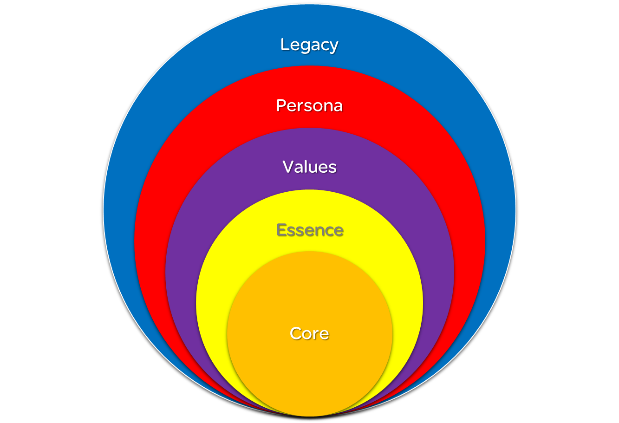
The Brand Construct - The innermost part (but naturally) is the Core of the brand. The core, as the word is defined in the dictionary, is the part that is central to the existence of the brand. The core of a brand is not unlike the calling that we humans oft struggle to find.
The questions that need answers are what am I about? What do I stand for?
The brand like all of us may well spend its lifetime trying to answer these questions. Also, much like us humans the brand also contends or grapples with these questions after having been in existence for a while. Very rarely, almost never is a brand born ready with answers to these questions. Greater understanding of this shall emerge when we look at the 3 dimensions of a brand’s existence.
- The next layer is the brand’s Essence. This is the layer that defines the playground for the brand or articulates the stage that the brand performs on.
The core and the essence of the brand often are to be articulated for and understood more by those who build it. The outcomes of doing so manifest in the layers that surround.
- The third layer is the one where the brand starts becoming more lifelike as its starts defining its own principles and standards of behaviour. Values give a window to and answer what drives or motivates a brand.
- Persona is the fourth layer of the brand. This is the layer that starts giving the brand a voice; answering the questions what do I say and how do I say it?
- Legacy is the outermost layer, the one that is all about the impact. What stays behind after you figured out your calling, performed on the stage, demonstrated what drives you and said what you wanted to the way you wanted say it.
Individually all the above are just words but collectively, they make an entity. One that is felt, seen, has a personality, stands for something and yes, gets talked about – a BRAND!
Before we move on to the dimensions of a brand’s existence it would be prudent to understand what we talked about with the help of an example.
The author mulled many different ones before settling upon BMW.
In sync with the times yours truly resorted to ChatGPT to “Describe BMW as a brand” (refer screenshot).
The answer that ChatGPT put forth is what this author shall use to build his theory of brand construct.
Sidenote: At this point, it makes sense to reiterate that the purpose of this article/post is to evoke/stimulate thought hence agreements and disagreements, mild or vehement are welcome. Please do leave your thoughts in the comments.
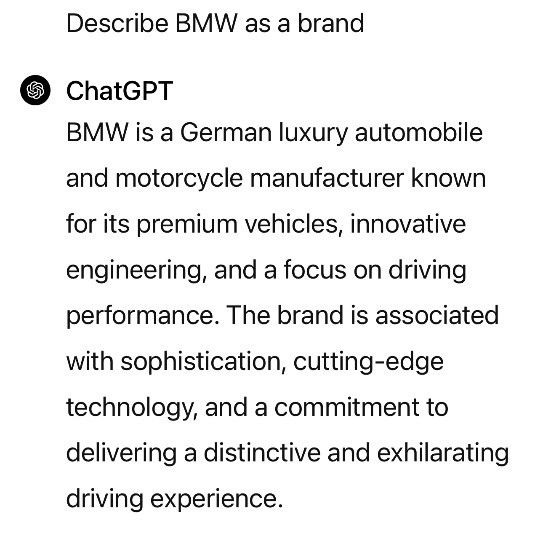
The CORE of brand BMW is “engineering”. When you start with an aircraft engine and then move to motorcycles and automobiles innovation is a given and therefore the ESSENCE of the brand. The VALUES of brand BMW are described by their “focus on driving performance”. BMWs ready association with “sophistication and cutting-edge technology” are indicative of its PERSONA. Finally, the brands “commitment to delivering a distinctive and exhilarating driving experience” is bound to be its LEGACY.
Overtly simple in retrospect? Not really, it has taken over a 100yrs of the brand being in existence for it to have the ability to be summarized so succinctly.
Which brings us to the dimensions of that hopefully, courtesy all that we have talked about explain themselves on their own.

Nonetheless, the 3-dimensional space that all brands operate in are as follows:
- Feeling
- Thinking and
- Social
Time speaks for itself as the 4th dimension.
Now the FEELING dimension is all about how a brand makes one feel. It is the tangible, experiential aspect of the brand. Continuing the BMW example. “Sheer driving pleasure”
The THINKING dimension delves into the evocative and subliminal aspects of the brand viz “innovative” and finally the SOCIAL dimension is projective and provocative – “sophistication/luxury/premium”.
All of which need TIME to build, consolidate and get entrenched into the psyche of the audience.
Summing up, a brand is so much more than a name that we choose.
A brand is the sum total of the experience that it delivers, the problems it helps solve, the job it gets done, the way it makes “me” feel, the way “you” see me, and the way the “world” shall remember the brand, you and me for having created and consumed it.
All of that, through its 5 layers and 3-dimensions!
Brand New Resolutions MMXVIII
 Here’s the good thing about resolutions. You get to make new ones regardless of having lived up to them!
ABVS is back with its 4th edition of Brand New Resolutions MMXVIII. Here goes..
Start | Looking at BRAND COMMUNITIES seriously.
We have read about them and perhaps even are a part of them. There are very few brands though that realise the goldmine that they are sitting (or not sitting) on. We live in an era of co-creation. Brands especially consumer brands today are a lot more in the perception/imagination zone than they were ever before. What has changed? The level of consumer involvement, the accessibility and more importantly the influenceability!
In an Indian context, some brands that have already a community feel to them are Bullet (Royal Enfield) and the surprise candidate Maggi (Nestle). The community in fact rescued the brand during its quality crisis a couple of years ago. Brands like Renault and Sunsilk also have tried their hand at building communities but they were lacking sufficient amount of emotional adhesive!
ABVS hopes more brands (re)evaluate their potential and give communities a serious thought!
Stop | Randomly using SUNNY LEONE for brand endorsements.

Yes this was in the less of category last year and no I have nothing against the lady in question. These random celeb endorsements really have to stop! While it was Pierce Brosnan last year it’s Sunny Leone Dholpur Ghee TVC this year. Brand managers/business owners who chose SUNNY LEONE as their ambassador need to really think hard rather than just feed a fetish! Came across this ghee (India clarified butter) ad. What were they thinking?
 More of | Re-imagination. An INDIA take on things.
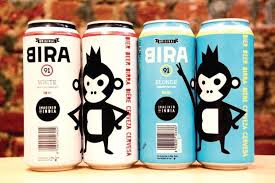
The way BIRA has built it’s product and brand over the past couple of years has been amazing. The beer is giving a serious fight to some premium beer brands of international stature. The beauty of it all an Indian take has not meant “MASALA FLAVOUR”. Another example from the same category is “Amrut” a brand of Indian Single Malts that has stormed the high castle of the Whisky world. So here’s looking forward to more Indian takes that are aimed for the world.
Less of | REINFORCING STEREOTYPES (PROPAGATING TROPES)

Perhaps the makers of these ads did not approach it that way. Perhaps they thought they were actually quelling the associated stereotypes. I use these two ads as examples of how stereotypes get reinforced. The problem? The messaging of these ads is nuanced. The audience these brands target not necessarily so. In wanting to depict a new, evolving face of modern India the communication of these brands has in my humble opinion has reinforced the stereotypes.

A working woman needs to cook for her mom-in-law, that there is a difference in saying Mummy and Mummy ji, that contribution to a household has to be in cash etc. etc. Our culture code and conditioning might just filter the progressive message. It’s about time communication took stereotypes head on and not in a round about fashion.
Brand New Resolutions MMXVII
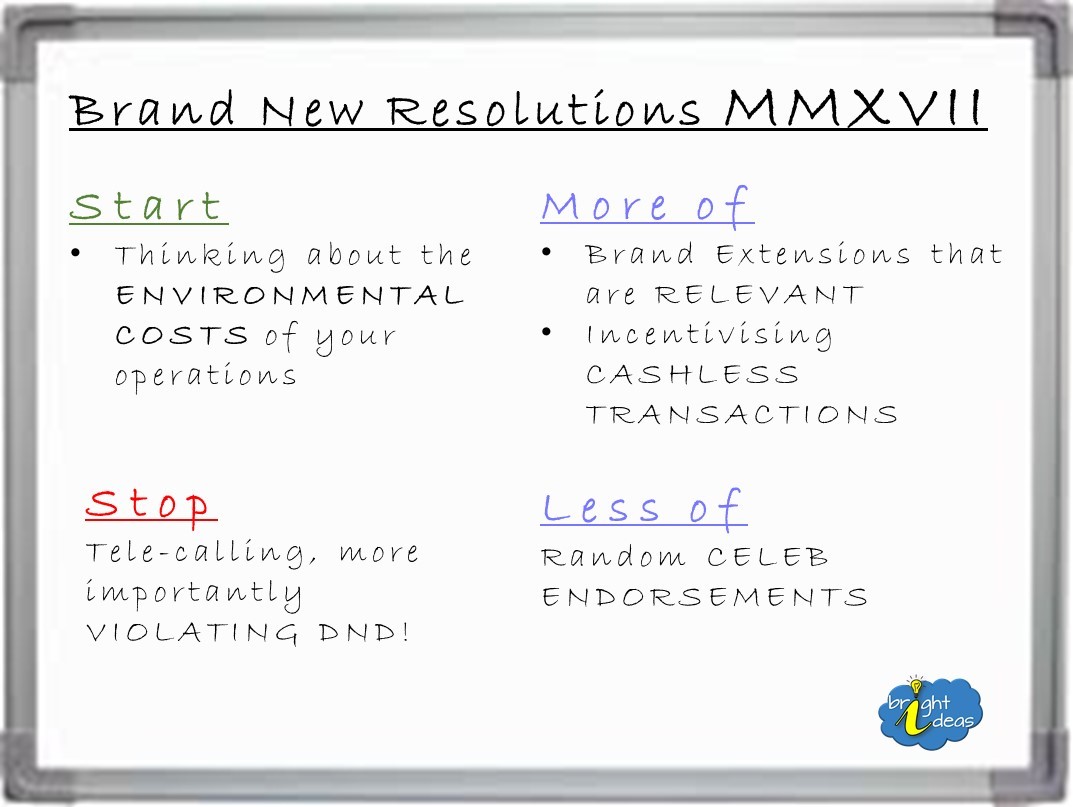
Yeah yeah someone hasn’t really lived up to his resolution of at least one post a month on ABVS. The lack of posts notwithstanding there has been a steady increase in the people following ABVS on Facebook and Twitter. So let me end the year on a thank you note and propose the customary Brand New Resolutions for 2017.
 Start | Thinking about the environmental costs of your operations
Yes! And all aspects of impact not just the in vogue concepts such as effluents and carbon footprint. Brands as organisations need to lead the change. The long hours, the long drives it all adds up doesn’t it. How about mandatory Work from Home for 20% of the staff every day? That would take 20% traffic off the streets on a daily basis across modes of transport. How about having no fixed no long hours days in a week? At least a day in every office where things close down on time. No ACs running while for four individuals in an office of four hundred! Sure the feared loss of productivity shall be more than made up.
 Stop | Tele-calling: More importantly violating DND!
This one goes out especially for the financial product brands. I don’t know of anyone who actually has benefitted from the unsolicited advice or has actually gone ahead and bought something as a resultant of such a call. Acquaintances in the know of the business though tell me otherwise. With all due respect there at least needs to be far lesser invasion of privacy. A relook at the frequency, Do-not-disturb etc. is sure warranted.
 More of | Brand Extensions that are Relevant
Was heart-warming to see Paper Boat introduce Chikki.
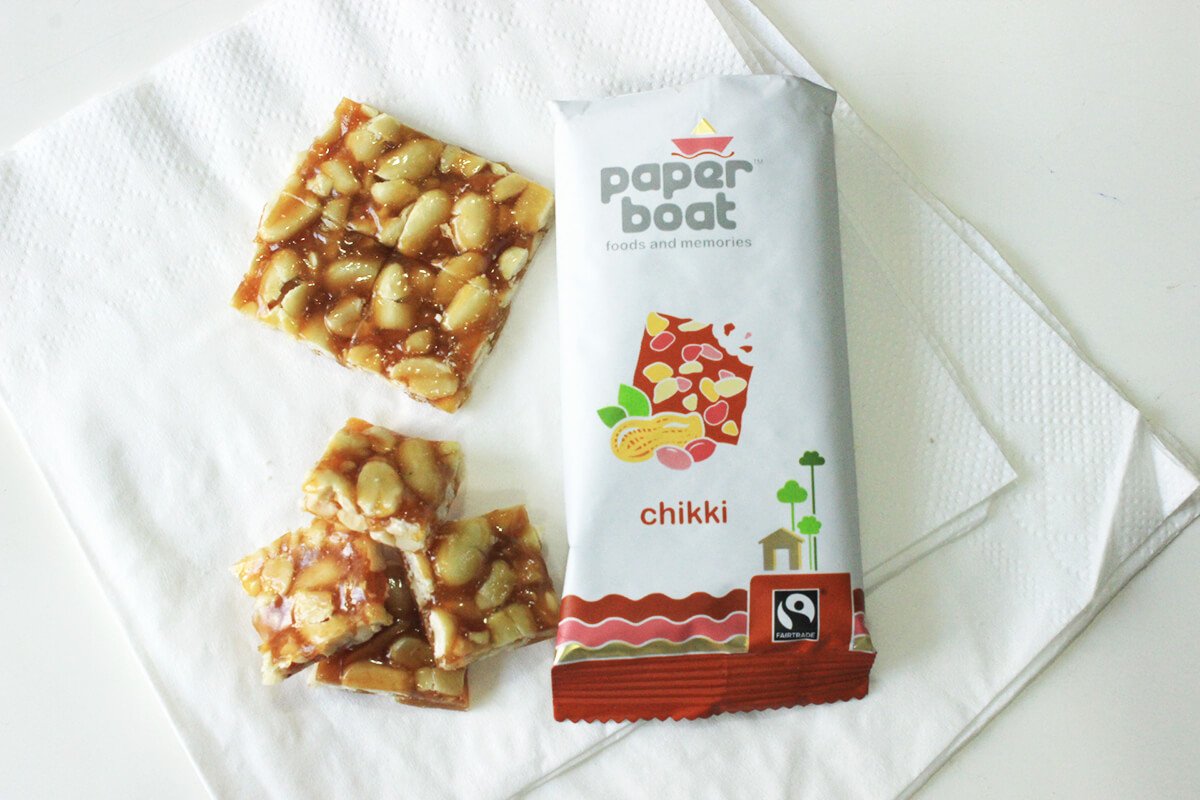
Not too sure how successful the exercise has been. Several factors such as pricing and distribution etc. shall determine the fate but presume its early days yet and wish the product the success it deserves.

More of | Incentivizing Cashless Transactions
I know the Wallet companies have mastered the art of cash-back and discounts for consumers. It’s time now for the brands to give fillip to the dream of a less-cash economy if not a cash-less one. There is room for improvement and even some savings in the last mile of distribution if cash-less transactions are implemented.
 Less of | Random Celeb Endorsement
The shocker of Pierce Brosnan holding up a tin of Pan Masala in a full page ad is the example that comes to mind.
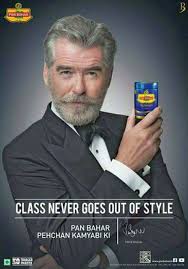
To the brands credit the category has for forever been trying to connect the habit of chewing pan masala to being classy even regal. Perhaps the Ashok Kumars, the Shammi Kapoors and more recently the Manoj Bajpais of the world were palatable. Getting Pierce Brosnan to endorse perhaps pushed the envelope a bit too far.
Brand New Resolutions MMXVI
Hello!
Thank you all those who kept your faith in A Brand View Story…I am conscious that this blog lost its steam post April this year! Guess this is what happens if you back RaGa as a brand. Well…the real reason was that I got busy with the launch of my debut novel Eighteen The End Of Innocence. Incidentally though I started the morning with a troll on RaGa..so I am gonna give him a break and come back to Brand New Resolutions for 2016. We are gonna stick to my by now familiar format so here goes…
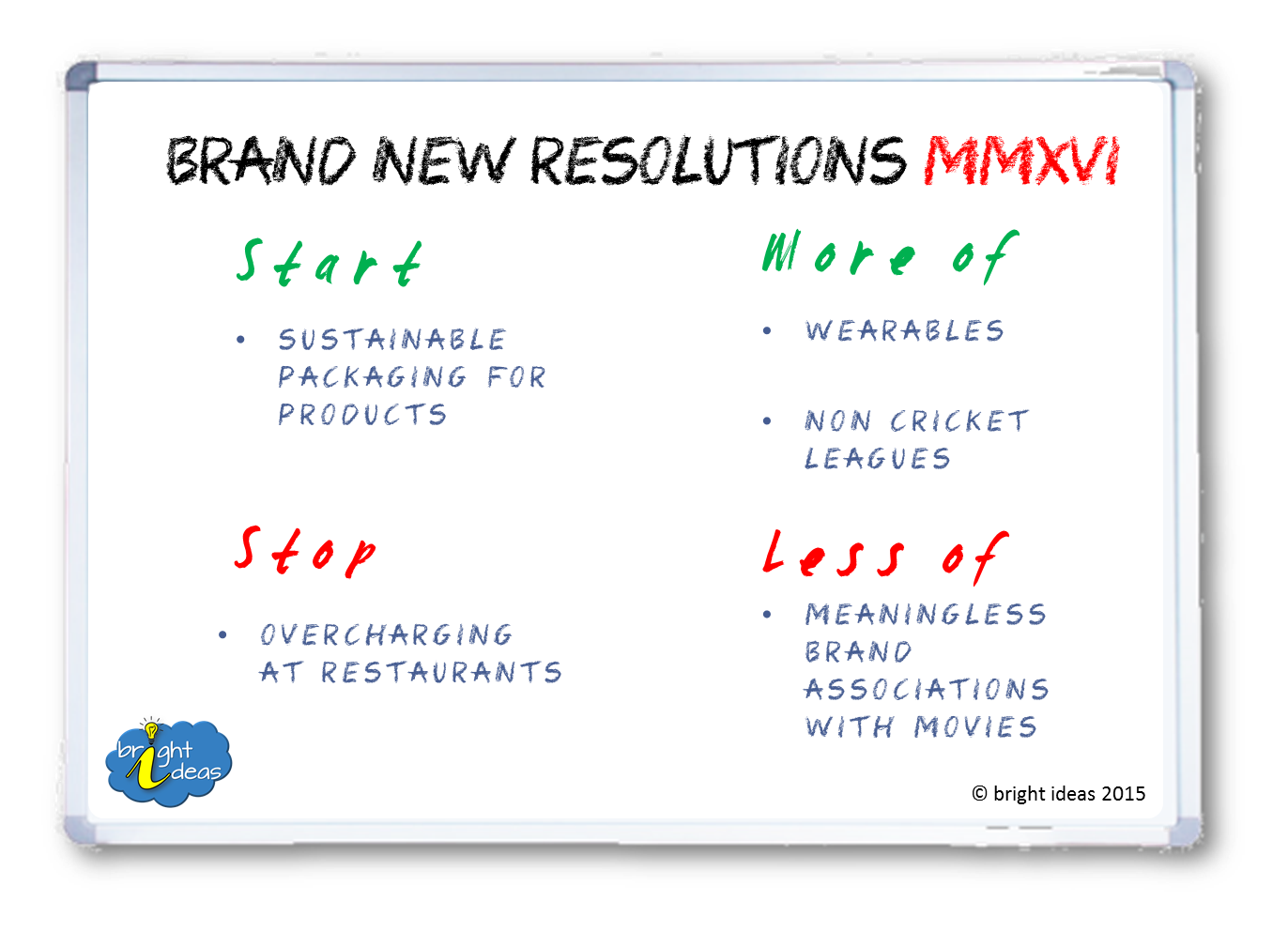
START Sustainable Packaging. Made a train journey recently and trust me the sight along the railway tracks was not a pleasant one. Tonnes of branded litter just lying around. From PET bottles to bags of wafers there they were strewn across boldly displaying their brands. If plastic is bad for the environment and use of paper leads to cutting of trees isn’t it about time we had more environmentally sustainable options? I would pay a rupee more if I had to. Hoping we all would.
STOP

Overcharging! This one is a plea more as a consumer. A lot many restaurants organized and stand alone alike take their customers for a ride when they present the bill. This overcharging is mainly done under the garb of taxation. Larger populace is ignorant or unaware with regard to the taxes that are applicable when they are dining out and succumb to this con. It is not appropriate to take names or paint the industry with a broad brush but it is reality that a sizable number indulge in this malpractice. It would bode well for chains if they ensured their billing practices are in accordance with the law. Fortunately for them India is not a land where class action suits are filed else quite a few brands could potentially be caught on the wrong side of law.
 MORE OF
Wearables! We have seen a flurry of watches in 2015 on Android and iOS platforms and they certainly have piqued curiosity in many of us. Would like to see this go beyond watches during 2016 and within the watches space itself; more utility apps would be nice to see.
 Non-cricket leagues! It was heartening to see brands support sport other than cricket. The Football league, Kabbadi league, Tennis league all survived another season. The fact that TV ratings saw an increase for Kabbadi and also for the Football league (except on days when there was cricket featuring India) augurs well for both the future of the sport and the potential that exists for brands.
 LESS OF
Meaningless Brand Associations with Bollywood movies. Believe that brands tend to risk their credibility when they associate with motion pictures. These associations more often than not are led by stars rather than any synergies between the content/story-line of the film itself. Brands would do better than to just chase good money behind their brand ambassadors bad professional choices.


