
General Management
Articles on Leadership, Organisational Behaviour, Strategy and General Management.
Stage Flight
Failure – Stepping Stone or Path to Condemnation
AI AI YO! Living Guilt Free with AI

Why Marketers and Professionals Should Embrace, Not Fear, Artificial Intelligence in Their Creative Processes
At the outset and on a lighter note, let me clarify I have not suddenly decided to call upon my South-Indian roots for creating the title. The expression “AI AI YO” is however inspired by this much propagated tripe – a caricatured representation of exasperation by a typical South-India character in Hindi movies. Having established that there is a need to reframe narratives. Let’s speak about AI.
The Era of Guilt-Free AI: Reframing the Narrative
For decades, technological innovation has marched hand in hand with professional creativity. From the printing press to Photoshop, each new tool has sparked debate and, sometimes, unease: Does this diminish my own effort? Does it erode the authenticity of my work? Today, with the proliferation of artificial intelligence (AI), these questions have echoed louder than ever, especially among marketers and other professionals whose work is rooted in communication, creativity, and strategy.
AI is transforming how presentations are built, scripts are drafted, videos are produced, and graphics are designed. Yet, a surprising undertone of guilt persists—an internalized doubt that using AI somehow cheapens the value of one’s work. This article makes a bold case: Marketers, and indeed all professionals, should not feel ashamed of using AI. Instead, they should embrace it as the latest in a long line of tools designed to amplify, not replace, human ingenuity.
AI as a Tool, Not a Threat
Reframing Perception: From Magic to Machinery
The core of the AI guilt complex lies in a misunderstanding of what AI actually is. It is not a mystical replacement for human talent, nor is it a shortcut that undermines authenticity. At its most fundamental, AI is a tool—sophisticated, yes, but a tool nonetheless.
Consider the spell-checker: When it first appeared, some purists scoffed, suggesting it would erode spelling skills and diminish the art of careful proofreading. Yet today, no writer feels guilty for running a spell-check before hitting “Send.” The same applies to internet search engines, which democratized access to information, or to digital cameras, which made photography more accessible.
AI is no different. It is a tool that, when used wisely, expands the scope of what’s possible. The shame comes not from the tool itself, but from a misplaced belief that using it somehow discredits the creator’s contribution.
Historical Parallels: Every Tool Once Felt Like “Cheating”
It’s helpful to remember that every technological leap in history was accompanied by a chorus of doubts. When calculators entered classrooms, some educators worried that students would lose the ability to calculate mentally—yet calculators freed minds for deeper, more complex problem-solving. When search engines redefined research, did it make scholars “less scholarly”? Of course not. It expanded their reach and accelerated their progress.
AI joins this lineage. It is the spell-check of structure and style, the search engine of synthesis and insight. It is not a destination; it is the vehicle on the journey from concept to creation.
The Marketer’s Dilemma: Authenticity vs. Automation
The Fear of “Losing One’s Voice”
For marketers, the anxiety about AI can be especially acute. Marketing is, at its heart, about connection—about telling stories that move audiences, spark action, and build relationships. The fear is that AI, with its data-driven logic, will produce content that is soulless, generic, or disconnected from the authentic voice of the brand.
But this fear is misplaced. AI does not think for you—it only thinks with you. It is a collaborator, not a ghostwriter.
Iterative Interaction: AI as Creative Partner
The best results come not from blindly accepting AI’s first output, but from engaging with it iteratively. The professional reviews, refines, and reimagines what AI delivers—injecting nuance, insight, and personality. AI can propose a bullet-point outline for a product launch, but only the marketer can adapt it to reflect the brand’s personality, market context, and audience needs.
This human-AI loop ensures the end product is both efficient and effective—saving time on mundane tasks and leaving space for the uniquely human touch.
AI in Practice: Enhancing Every Stage of the Creative Cycle
Presentations: From Blank Slides to Compelling Narratives
Anyone who’s stared at a blank PowerPoint knows the agony of beginning. AI can break the ice—generating frameworks, suggesting data visualizations, and even drafting talking points. But the professional curates, edits, and polishes, ensuring the final presentation is persuasive, purposeful, and on-brand.
Scripts and Content: Drafts that Spark, Not Replace, Creativity
Whether scripting a commercial, drafting an email campaign, or outlining a webinar, AI can generate first drafts that save hours of effort. But these drafts are starting points. The marketer adapts language, tunes messaging, and adds the emotional resonance that only a human can provide.
Video Production and Graphics: Lowering Barriers, Not Standards
AI-powered video and graphic tools democratize high-quality content creation, especially for small teams or solo professionals. AI can automate editing, suggest color palettes, or even generate animations. But vision and intent come from the creator. The professional uses AI as a brush, not a blueprint.
AI and Human Involvement: The Necessity of Intervention
Guardrails and Guidance
AI is only as good as the hands that guide it. Blind automation leads to generic, unremarkable output. Wise use, on the other hand, means setting clear goals, asking the right questions, and editing with intention. AI accelerates the “grunt work,” but judgment, values, and vision remain human responsibilities.
This interplay is especially vital in marketing, where context, emotion, and cultural relevance drive results. AI learns from patterns, but humans recognize meaning. The magic happens at the intersection.
Ethics and Accountability
Another reason for human involvement is ethics. AI can inadvertently perpetuate biases or misinterpret sensitive topics. Professionals must review, refine, and take responsibility for the final product. This accountability is the hallmark of good practice—regardless of the tool used.
Shedding the Stigma: Guilt-Free AI Adoption
Transparency and Professional Pride
There’s no shame in using AI—only shame in failing to use it wisely. Transparency is key. Just as writers acknowledge spell-check or researchers cite search engines, professionals should feel free to disclose their use of AI. In fact, this openness can foster trust, demonstrating a commitment to quality and efficiency.
Skill, Not Substitution
Using AI does not diminish professional skill; it demands new skills. Marketers and professionals must learn to ask better questions, interpret nuanced answers, and curate large volumes of information. AI elevates the role of the professional from laborer to orchestrator.
Looking Forward: The Empowered Professional
Efficiency Meets Effectiveness
When marketers and professionals embrace AI without guilt, they unlock unprecedented efficiency. Routine, repetitive tasks—research, formatting, basic drafting—are handled in moments, freeing time for strategic thinking. AI augments capabilities, enabling individuals and teams to do more, faster, and at a higher level of quality.
Endless Opportunity for Innovation
Far from stifling creativity, AI creates new opportunities for experimentation. Marketers can rapidly prototype campaigns, test messaging, and personalize content at scale. Professionals in other fields—law, healthcare, education, engineering—can automate routine work and focus on impact.
A Human-Centric Future
The greatest promise of AI is not that it replaces humans, but that it empowers them. The professional of the future is not the one who shuns technology, but the one who integrates it thoughtfully into their craft. This is not surrendering creativity; it is amplifying it.
Conclusion: Embracing the Guilt-Free Creative Future
AI is, and always will be, a tool. Like every tool that came before it, AI’s value lies in how it’s used—not in what it threatens to replace. Marketers and professionals should view AI as they do spell-check or search engines: an enabler, not an eraser, of human creativity.
By embracing iterative interaction and maintaining appropriate human involvement and intervention, professionals can ensure their work is not only efficient, but also effective, relatable, and authentic. Those who harness AI wisely will lead the way to a future where creativity knows no bounds—and where guilt has no place.
The future is brighter, more efficient, and more imaginative than ever.
So, use AI—freely, proudly, and without an ounce of shame. This is the time for AI AI YOU! The world is waiting for what you’ll create next.
PS & DISCLAIMER:
This article has been drafted & created with the help of AI. Now does that sound like something I have written about, and you have read before? Good luck figuring it out. Either way, I still have undeniable IP rights on this content. Do leave your thoughts in the comments or DM.
10 Tell-tale Traits of Terrible Leadership
The fact that you have gone beyond the title and started reading this post is proof that tapping into emotions is easy and tapping into negative emotions easier 😊
I have been thumbing through multiple books and articles on leadership and management as part of research that I am doing. That combined with experiences in my own professional life (including yours truly as a leader) have led me to distill my considered opinion into this blog post.
What I am about to present to you are traits that one must be on the lookout for if you are being led and even more so if you are the leader. There are ten tell-traits that one must be wary of. Every leader I know of or have read about has had at least one of these flaws. All leaders, depending on situation and context, are prone to displaying these traits. The challenge and a big one is when these traits are on display consistently.
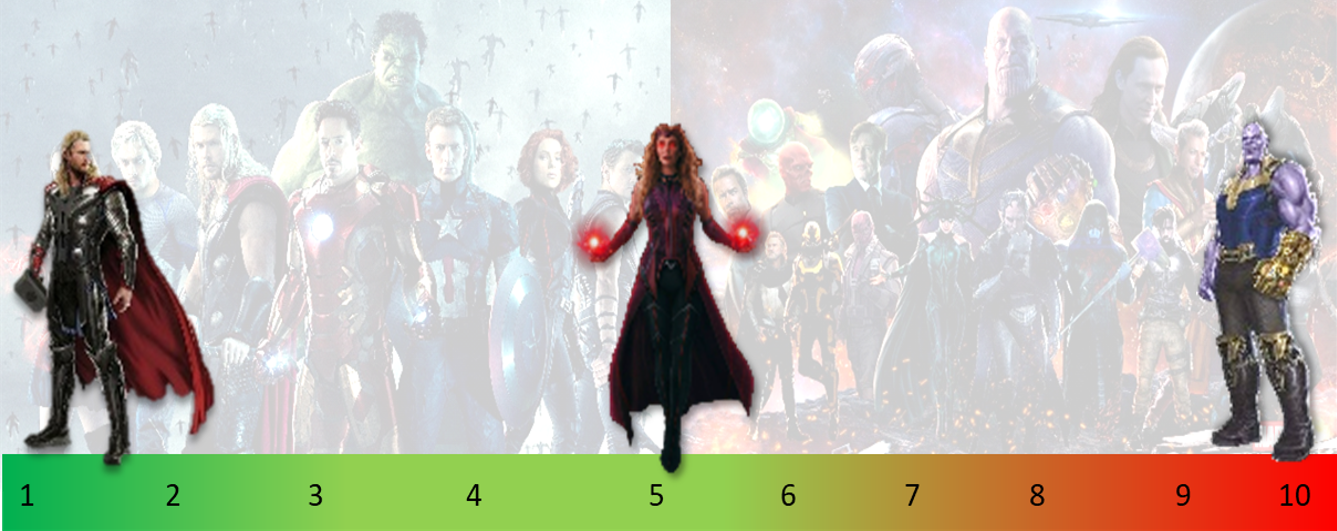
The score on a scale of 1-10 would have a fictional superhero like character on one end (say Thor) and a villain (Thanos) on the other with Wanda as the inflection point between the forces of good and bad. Fictional for the simple reason, nobody is that perfect or even that flawed! To those unfamiliar with the Marvel Comic Universe – just replace the names with superheroes or villains with whom you are familiar.
So here are the Tell-Tale Traits in no specific order. How many can you associate with yourself or with a leader you know?
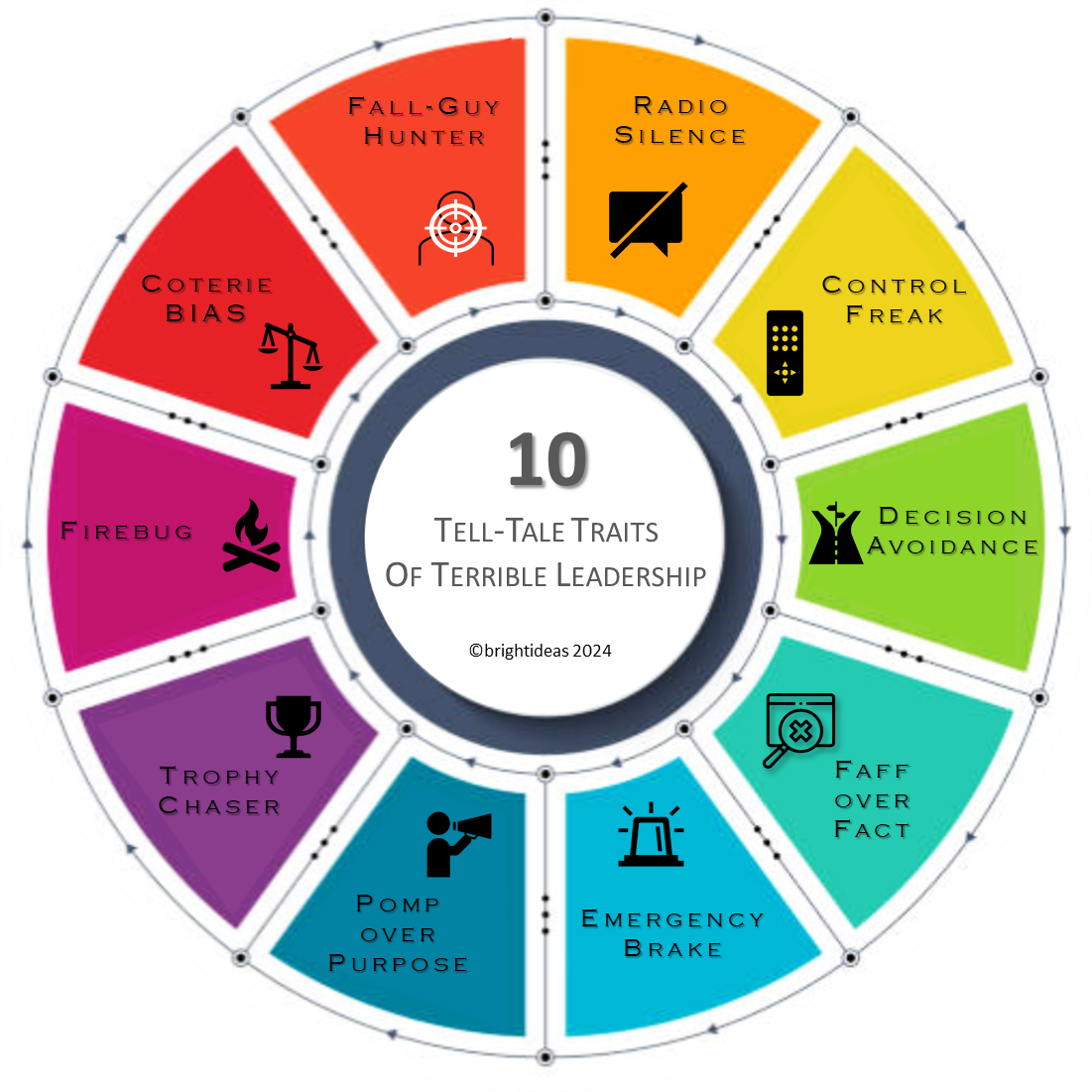
- Radio Silence: A leader who does not interact often with the team or interacts only when there is a task to be assigned or only on occasion or with an appointment is bound to end up as an unpopular one. Again, this is not to say that one must be an extrovert to be a good leader. It is accessibility that is crucial for leaders. Styles of interaction may differ but one thing that all good leaders do is make an effort to be seen in the trenches.
- Control Freak: While it is important to monitor progress, we all have seen leaders who get under your skin with their supervision. A key requirement for a leader is the ability to delegate tasks. There is skill associated with the ability to identify appropriate resources for the task and setting clear success metrics. A skill the Control Freak lacks.
- Decision Avoidance: This is thin ice. A leader is expected to be decisive. Procrastination, though avoidable, is still acceptable. After all, situations need to be analyzed and consequences weighed but a leader who constantly avoids taking decisions is trouble incarnate.
- Faff over Fact: A leader who often focusses on optics and is happy to gloss over facts is a potential integrity and ethics disaster waiting to happen. Convenient interpretation and cuts of data are a trap. A leader who accepts or looks the other way when a subordinate does it is worse. There will come a time when one too many facts have been overlooked or misrepresented. You do not want to be around when that happens.
- Emergency Brake: This is a trait often seen in conjunction with trait three above. A leader who is not fully or deeply engaged is often the one who resorts to the application of emergency brakes. In general, there is a lack of clarity or direction, and conflicting views abound. All work gets stopped, often with little or no explanation. A display of trait three ensues.
- Pomp over Purpose: Many new leaders are guilty of this. Some unfortunately continue with it. This is when leaders commission projects and campaigns, hold workshops and events needlessly under the garb of collaboration or building wider, deeper understanding. The return on time and money invested quite frankly is not a consideration nor are “understanding” or “collaboration” well-defined objectives. The idea is not to say no to such exercises, it is doing them with clear outcomes.
- Trophy Chaser: Again, there is nothing wrong with ambition or going for the win. If that were the case, there would be no examples from sport or war, especially, when it came to leadership. Winning is important, participation is important. But doing anything for the sake of just that is meaningless. You do not stop during a marathon to win a game of darts!
- Firebugs: Some people are busy like a hive. They can multi-task. The challenge is being fickle, not seeing through what has been set into motion to its logical conclusion. Such leaders are firebugs. They have the tendency to light multiple fires, the latest one invariably is priority, and they gather people around that one with scant regard for the status of fires lit previously.
- Coterie Bias: It is human to crave attention. We are all vain. Leaders too. Unfortunately, popularity as a leader is something only an exceptional few achieve. Some understand and learn to live with the fact. There are leaders though who create their personal bubble – surround themselves with people who laud them, right or wrong. Over time their reality alters based on facts/fiction that is fed to them. Often this leads to blatant, unapologetic biased opinions. Sycophancy is not just a terrible trait it is a dangerous one!
- Fall Guy Hunter: This is a trait that should set alarm bells ringing. A leader is accountable. In the real-world things do go wrong, all of us have at some point in our lives taken wrong decisions, made an inadvertent mistake. Yes, errors need correcting, performance needs improving, and the buck must stop somewhere. The leader has the right to reward or reprimand. That said, the onus is also on them to course correct and deliver. Error detection does not absolve the leader of their duties. Covering up is different from covering for. Mistakes are a test of character all round. A leader who throws his team under the bus is not worthy of his position.
The traits listed above are by no means exhaustive. They are nonetheless, traits that are highly visible/tangible.
A good starting point for all of us whether leaders or leadership aspirants or plain simple contributing units of a professional (even social) structure.
Understanding the Alpha

CHANGE IS THE ONLY CONSTANT; so the adage goes. However, is EVERYTHING MUST CHANGE necessarily the sequitur? Is it always the case with ALPHAs or is that just a convenient stereotype?
I was watching a wildlife documentary recently and the parallels between corporate and jungle were drawing themselves out. I also remembered reading an article that mentioned that alphas make up to 70% of all senior executives.
While the concept largely drawn from primates and wolf packs, is based on the behaviour of the males of the species, we shall, for the purpose of this post remain gender agnostic.
Given the statistic quoted above, I have seen several people who would fit the ALPHA bill in my two decade plus experience. Some have been bosses, some peers and yet others subordinate as far as the hierarchical structure is concerned. Continuing the inherent sexual overtone to ALPHA behaviour, my observations are as much based on the dominatrices as they are on the dominators.
There fundamentally are two types of ALPHAs
Category A – The Bully
The minority that drives the stereotype. This category of ALPHAs is more about the self and hence the traits that they manifest are not necessarily all positive.
The belief system of The Bully is founded on the thoughts below:
- Power Demands (brazen) Display
Demonstrated power is a cornerstone for the bully. It can range from bravado to violence. The bully revels in a blood-bath and often relies on upheaval to signal change.
- Zero Sum Game
If there’s a winner there HAS to be a loser. It is not sufficient for the bully to succeed. The bully often relies on painting someone or something as the loser. The bully needs (sometimes shall create) the binary for credibility.
- Spoils Only to the Victors
The binary is extended to apportioning of the resources. The Bully shares the rewards with a select few creating a visible divide between the haves and the have nots.
- Citadels Are Built on Ruins
This is an unfortunate hallmark of The Bully. They believe that for the new order to come into existence the old order has to be erased. The Bully invariably dismantles the old without thought or consideration.
- Coteries and Sycophants
What usually starts-off with attraction to personal charisma of the ALPHA is gradually replaced by privileges. The loyalty of course, is continuously diminishing. Since a coterie of sycophants is encouraged over counsel, it invariably leads to the downfall of The Bully.
Category B – The Genuine Leader
Fortunately, the majority. They are the ones who manifest the positive aspects. They are confident and usually in control – both of the situation and their self. They win the trust of the tribe by solving problems. They are judicious in their use of consensus building and taking unilateral decisions.
The ethos of Leaders revolves around:
- Exemplary Courage
The Genuine Leader has a positive attitude with a bias for action. They would rather fail trying than not attempting. They are impatient but only with inaction. Success and failure, therefore, are mere outcomes.
- Handling Change
The Leader is driven by a vision. Able to deal with ambiguity, a good leader builds a bridge over the troubled waters by breaking it down into simpler steps for the tribe. Change if external, is not feared. If internal, has purpose.
- Equitable
A genuine leader is able to rise above personal likes or dislikes. They have a utilitarian view of their team and therefore is able to task and reward without playing favourites.
- Trust Built Authentically
The Leader delivers on his commitments. Failures if, where, and when are addressed instead of passing blame, being brushed aside or given justifications for.
- Line of Succession
Leaders plan. They can visualize a world without themselves in it. Succession, for the genuine leaders is not as much about continuity of stake as it is about sustaining growth. A good leader is unafraid of naming a successor.
From an anthropological perspective, whether it is corporate life or life in general, it is important to understand the ALPHA.
So, which kind of ALPHA do you see when you look around in your organization?
Or
Are you the ALPHA that others are seeing? If so, which kind?
Aye Aye, Captain! Lessons in Leadership from Indian Cricket
 We are a cricket crazy nation or at least have been one ever since I can remember.
My love for watching cricket catapulted into a new orbit one summer day in June 1983 when India won the Cricket World Cup or the Prudential Cup as it was called.
It’s been a long journey since then with India reaching the top spot in Test Rankings, winning the T20 World Cup and then the ODI World Cup again in 2011. There was of course more glory along the way in the form of victories at other prestigious international tournaments.
As crazy as we are for the sport, we are crazier when it comes to the players often elevating them to cult even “god” status.
Gavaskar, Kapil Dev, Tendulkar, Dhoni and now Virat their popularity has been or even is unprecedented. Nowhere in the world do players receive greater adulation than in India.
Often the stars are the game! While individuals can give superlative performances that determine outcomes or have their moment in the sun by setting records – the fact is that Cricket is a team sport.
It is good teams that win and the truly great teams are one that win consistently. That said, teams are what their leaders make them believe they are.
Belief, confidence, that’s what leaders instill. Great leaders are not necessarily the best at what they do but more often than not they are the most consistent at it.
There have been many good captains in the history of Indian cricket. Each having contributed to what Indian cricket is today. But there are 5 that stand out in my mind as the greatest captains to have led India. They are:
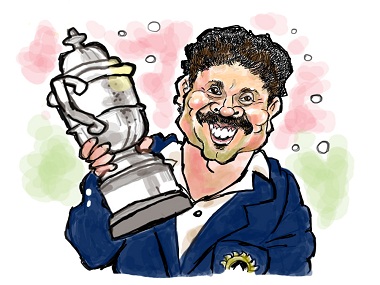
Kapil Dev – The captain who taught India that they could indeed win!
Most anecdotes around the 1983 World Cup win are around how the Indian team in general did not believe that they would last beyond the initial stages – save Kapil Dev. The Haryana Hurricane not really a great communicator kept pushing his players into believing that they could indeed win by his performance on the field. His knock against Zimbabwe baptised the entire dressing room in a span of a few hours.
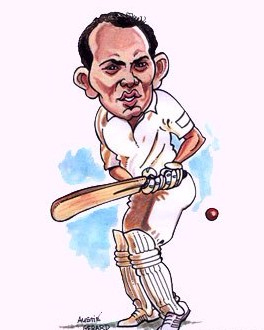
Azharuddin – The captain who taught India that they could win again and again!
The controversy surrounding him apart. The charm of watching Mohd. Azharuddin on the field whether while batting or fielding is undeniable. Just like he could flick most any ball from off, middle or leg towards the leg-side or take catch after catch, he taught India that they could win time and again. The 14 test victories and 90 ODI victories under Azhar proved that the wins that started post World Cup 1983 were not just a purple patch!
 Ganguly – The captain who taught India that they could win against anyone, anywhere!
Not only did Ganguly go on to better win-loss-draws record once he took over as captain the wins under him were against almost all the best teams. This puts him in a different league. He led India to test and even series wins against mighty Australians, South Africans and the English at home and away! Till then the perception (some would argue it still is) about India was that they were tigers that roared only in their own den. Under Ganguly India actually won more tests abroad than they won at home!
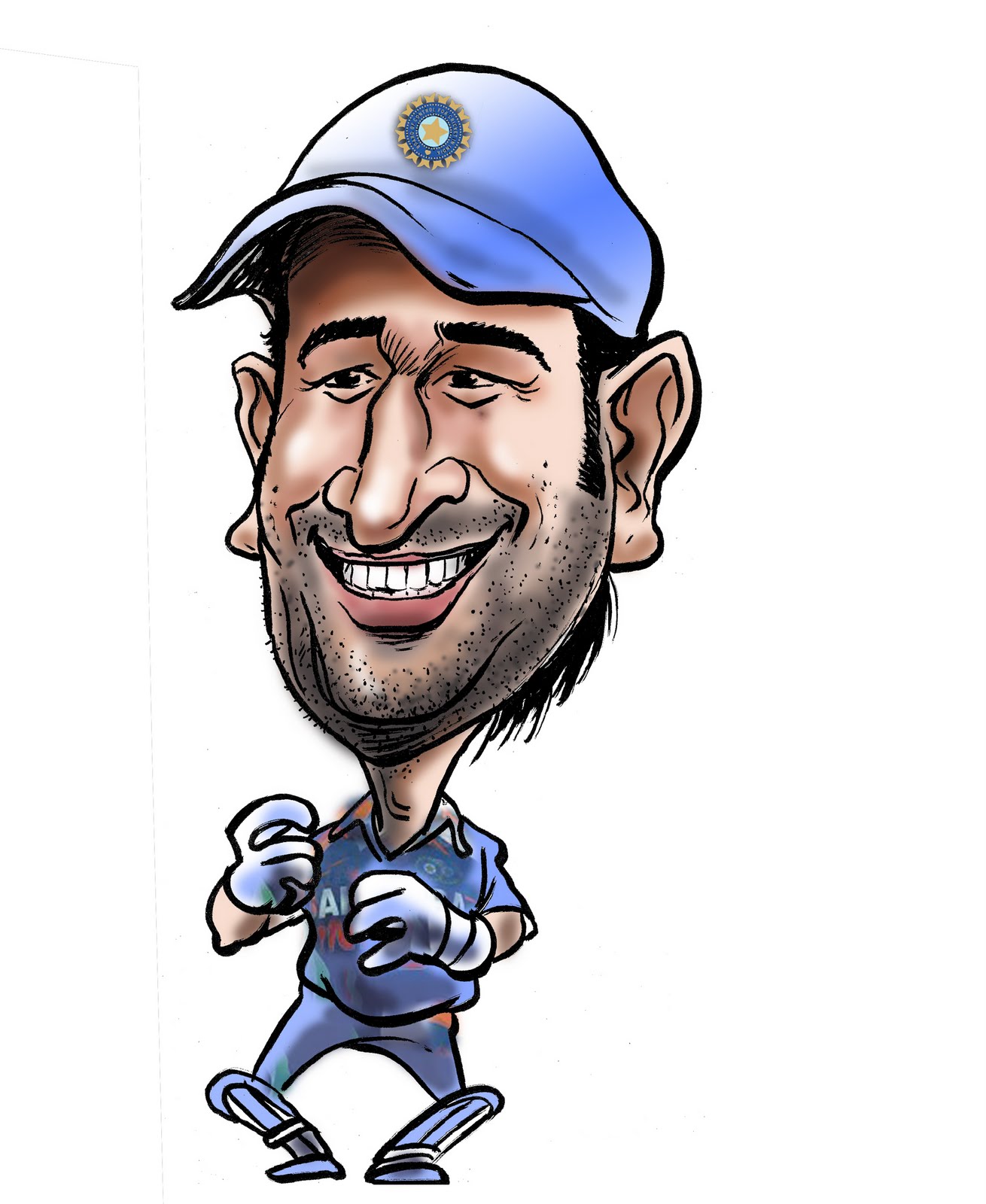
M.S.Dhoni – The captain who taught India that they could win against anyone, anywhere and from any situation!
Dhoni is arguably the most impactful captain that India has had thus far. One may say that Dhoni’s impact as captain was largely in the shorter (later shortest) formats of the game. However, it cannot be denied that it was under his captaincy in 2009 that India ascended to the top of the ICC test rankings. Yes the ranking system itself came about in 2001 but it still was dominated by the likes of Australia and South Africa. Dhoni essentially converted the Indian unit into a machine sans emotions. Going about business regardless of the situation and with the ability to crank it up a few notches. Games are essentially won and lost owing to brief passages of play where the initiative is up for grabs. Dhoni had a knack or the ability to identify these passages and wresting the iniative from the opposition. Yes under Dhoni the away performance did dip but the context and concept of winning changed.
 Finally, Virat Kohli – The captain who is teaching India that they can win against anyone, anywhere, from any situation again and again.
The story of Virat’s captaincy and that of India under him is still unfolding. As I write this piece India has just won nine consecutive test series and prior to this seven odd series wins when the won the series against New Zealand. It’s not been often that a star, a captain and his team have been this scorching hot. Kohli with his own no compromises leadership style is writing history the only way he knows – his way!
Five leaders across five generations each giving something that on hindsight dove-tailed into the next great transformation that India made as a cricketing nation.
Lessons perhaps for leaders of nations and corporate world alike.
- Belief is the prime ingredient for success. Those who do not see themselves winning or succeeding often never do!
- Confidence stems from the conviction of one’s abilities. Great leaders are invariably great judges of strengths (their own, their team and the competition) and play to them while denying the opposition theirs.
- Success is a journey and not a destination. Great leaders know this and always protect the foundation, continuously improving/strengthening it.
- Building on something yields far better results than starting things from scratch. Great leaders never let ego get in the way of recognising the good done by their predecessors.
The Thin Line
The Bollywood Dancers Theory
We all are born different, look different, react differently to things and want to be seen differently yet, at some level, each one of us has this strong urge to blend in.
My interactions with people across a cross-section of society during numerous Consumer Home Visits have reinforced this belief that people want to “Blend In yet Stand Out”. The Ryder to that one however, is that no one wants to Stick Out either.
Is there a difference? You bet.

A big part of growing up is the time one spends with friends or a peer group of some sort. It is here, in my opinion that the seeds of this Blend In yet Stand Out philosophy are sown.
You want to listen to music, you play it out loud! You make sure you stand out by being the one who either has the latest releases or the guy who knows all the lyrics or the one who has the coolest “system”. You do not want to be seen as the guy who is unaware, out of touch or as the one with a radically different taste in music (try playing Boyzone out loud in an all boys hostel).
Blending in does not mean not having respect for an individuals choices. You hang-out some guys drink, some do not, some smoke, some others do not. But you definitely do not want to be the guy who throws up after a few or if you do not drink the guy who’s gotta be dropped back early coz Mama’s gonna be wild 😉
It’s not just a guy thing. Not that I am an authority but I’d wager that girls have their own set of what constitutes being a part of the gang and what is seen as not being with it. American diamonds perhaps are one such controversial area (cannot fathom whether they belong to the with it or not category for the life of me, was told once that they are good only if they are not obvious)
We grow up and move on into doing different things but this feeling stays with us. It manifests itself in things we do or things we buy. Take for example cars we all buy cars of our choice (make and model) however when was the last you heard of a friend who bought a yellow or orange or some other bright coloured one. Might like it but won’t buy it coz you do not want to stick out.
This therefore is the essence of what I have chosen to call the “Bollywood Dancers Theory” and it perhaps lies somewhere in the Esteem Needs zone of what Mr. Abraham Maslow talked about.
People inherently want to stand out in the context of their immediate environment
Like a typical Bollywood dance sequence while the protagonists want to express their love to each other by singing and dancing around trees or montage sets they need to be seen as gyrating to the same beat and doing the same steps as a host of other dancers (who appear and disappear as miraculously as the invisible orchestra does) they always wear a different colour. Blending in yet, standing out!

