
Brands & Branding
A collection of marketing articles inspired by news, events and happenings. A view of the world through a marketers lens, drawing branding lessons from everyday occurrences and observations.
Timing Out : When Brands Need to Say Goodbye
 We have often talked about the emotional bond that brands create with consumers and how it is their raison d’etre. The flip side and perhaps also the down side is the emotional bond that brands form with their creators and managers. Several brand managers and businesses have been guilty of stretching brands beyond, well beyond their limit.
So how does one really know that it’s time? Unfortunately there are no easy answers. However, we do have some lead indicators that emerge from collective wisdom and common sense. Brands are tricky, we all know that. There is no single definition of brand success.
I for one come from the school of thinking that professes and propagates that brands exist for the sole reason of making businesses uniquely identifiable and profitable. Therefore, true brand measures ought to have blended business metrics.
Coming back. What should we as marketers look out for? The best metrics are invariably those that are rooted in market context. After all reality is a key requirement for a reality check!
Brands typically monitor and map their performance on the following dimensions (or similar)• Recall (Memorability)
• Perceived Quality (Premium)
• Revenue Share (Significance)
• Profit Share (Viability)
• Voice Share (Visibility)
• Relevance (Utility)
• Engagement (Sociability)The seed of this post came from a recent news item that announced the winding down of HMT watches. A brand that was anchored in a nations pride and one that definitely made a mark with atleast two generations of independent India.
If one were to put the above parameters together to construct a health radar, HMT watches one would have seen the brand perform poorly on all of these parameters not today but over atleast a 10 year period.

The call to wind down should perhaps been taken long ago instead of allowing the brand to bleed to death. One may argue that it’s the either the fate or fortune of Public Sector companies in India that the get such extended runs. Fortune because the being a Public Sector Undertaking means a long leash and fate because the long leash often means inaction.
HMT watches is not the only example of brands dying slow painful deaths and for sure the phenomenon is not limited to the public sector alone.
Ambassador another memorable brand owned by Hindustan Motors remained active albeit propped up by its “taxi” and “state vehicle” tag. Long after it had faded the brand managers wanted to give it a might heave with a souped-up version christened Amberoid till reality bit them!

There are bound to be ups and downs in every brands life. The revival, rejuvenation plans should kick into place while most of the markers on the Health radar are still in the pink. It is for the businesses to decide basis their “strategy”. The answers can only emerge from the ability to impact the multiple dimensions enlisted above.
As they say, “An honourable exit is saying goodbye while there are more people asking why rather than why not!”To Cut A Long Story Short
 Brand pundits have forever stressed on the importance of brands creating long term associations. There is a vast choice of media that is available today to brand managers and media planners. Given a scenario where investments are often spread across disparate media, the onus is on the brand to tie the choices with a meaningful message.
The new century and the social media boom gave a new meaning and a fresh lease of life to what have come to be known as Integrated Media Properties. These are typically brand association opportunities that are multi-platform including a combination of TV, Digital, Print, OoH and On-ground events. The most popular being Live Action Sports events, Reality Shows and Award Functions with varying doses of the Bollywood glitz and glamour.
The media houses in order to retain a larger chunk of the marketing dollar conceptualized and networked to create more and more such opportunities throwing in dollops of commercial time, screen space, you name it to maximize brand presence. The agencies as expected were quick to evaluate and ascertain value of each such offering. Huge outlays were made possible with the promise and lure of multiple X returns on marketing investment. The brand teams were happy since they now had a “property” to associate with, build and nourish long term. The agencies and media houses of course were too happy to rake in the moolah. The bean-counters all round were happy too.
Nothing as they say is perfect! Soon with the pressures of economy and other dynamics the brands were shy of making long term commitments and vary of huge outlays. Owning a property didn’t seem that attractive. Several wound down.
Only the property “IP” owners with staying power remained in the fray. However, they sold the dream in parts to realize their investment. The “integrated multi-media platform” and “long term association” story that was used as the foundation crumbled under economic pressures.
There are several examples of “properties” having changed hands. However, to highlight the case in point I will take the example of the Champions League T20.








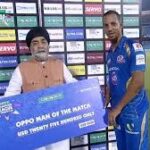


CLT20 and Sponsors over the years 
This cricketing event was almost force fitted into the international cricketing calendar. In its 5th edition the property has already had 4 brands as its title sponsors.
Airtel, for the inaugural season followed by Nokia the very next year, Karbonn for the next two seasons and now Oppo for the 2014 edition. The brands (Basis the Most Trusted Brands Survey) and the brand muscle eroding every subsequent year.

The full page ad that appeared in ToI on 17/9/14 had no mention of the sponsors. 
Gone were the benefits of long term association and even the media platforms if at all integrated, were not all available to the brands. Being the “Title Sponsor” no longer meant getting the fully loaded top end version with all bells and whistles. With the long term vision being out the brands did not really “own” the property and nourish it with their support across their other assets to engage the TG.
The best associations often become integral and a given. Some great examples of association exist in sports like tennis, football and F1. Wimbledon and Rolex, French Open/Davis Cup and BNP to name a few.
Marketers being marketers, “impact properties” became a more popular term of reference.
I am sure the numbers on RoMI all still add up. The question really is whether the brands are really building an association with the TG?
The Last Laugh
 It takes something special to laugh at yourself. To do that not just in front of a mirror but it full public view, you need to have tremendous confidence in your ability.
We would have often seen brands employ humour in their communication. There are certain brands which are known not to take themselves seriously, they are about having fun and they do it unabashedly. Then there are brand that mock their competition. But very seldom have brands mocked themselves.
We have often talked about individuals as brands and in a celeb obsessed country like India we have quite a few. But the masses are fickle they can put you on top or grind you to the ground.
This article is inspired by two examples where the protagonists had the courage to do it. Yes the communication has not been initiated by them but the fact that they chose to be a part of it speaks volumes. They took the risk of facing ridicule. One is an example of someone who has done it at the very start of their career, the other one at the ebb.
Alia Bhatt
Sourav Ganguly
http://www.youtube.com/watch?v=xFkJNlvtqYs
Like I mentioned to laugh at yourself needs confidence in one’s own ability. A confidence that comes from not only understanding the strengths but also the weaknesses. It requires resilience.
And what is it not?
Laughing at one self is not just demonstrated by the ability to take things in the lighter vein. It definitely is not about clowning around.
It’s about taking the bull by the horns. It’s about putting yourself out there to be judged with all your defects and inadequacies in the open. The risk is great but the rewards are far greater.
Can brands take a leaf out of this book and do the same? Can they take a weakness and convert it into a strength? Laugh or ridicule themselves openly and then comeback even stronger? Can they have the last laugh?
Well as they say, “Nothing ventured noting gained!”
3 1/2 Signs of Lazy Marketing
 No less than a dozen brands are vying for the consumer’s attention every waking minute of the day. Some pleading, some enticing and yet others imploring him to give them space and preference.
In such a situation, brands and even more importantly those managing these brands need to work extremely hard for their communication to register. Despite being aware of the acute attention deficit some marketers go ahead and release sub-par communication, products and sub-optimal support.
Now one may argue that effective marketing need not necessarily be intelligent but it sure needs to be hard working. It cannot be denied that marketing must eventually end up moving the needle as far as a brand’s awareness, recall, preference, premium, profits, share etc. are concerned.
Often though marketing managers fall into the trap of creating a go to market plan simply because there must exist one. Succumbing to the pressures of fighting the competition, maintaining the share of voice, launching with full aplomb, keeping the channel partners satisfied do tick box but this approach is what breeds “Lazy Marketing”.
So here are 3 ½ signs of Lazy Marketing to watch out for. They might not exactly be as fundamental as the 4P’s but they are a good set of lead indicators if you are in the planning phase.
 Bigger, better, faster, more
If a product is just about being bigger, better, faster, more as compared what competition has to offer then you know that there is little differentiation involved. So if you hear better mileage, smoother ride or larger, brighter display you know!
 Pricing Paralysis
Most marketers seem to have forgotten about using pricing as lever. If ever they do it’s a defensive move which more often than not says “Hey I am not really sure if my product is better than the other guy, but I am lower priced”. When they do price higher they go on a justification trip. Pricing should signal value and if it doesn’t someone is being lazy.
 Feeding the Fad
Let’s face it there are only so many ways of doing things and innovation is a stranger who comes into town very rarely. But the worst thing all of us as marketers can do is feeding the fad. Can’t come up with a good activation “Let’s do a flash mob”. Want to get some consumer interaction going “Let’s get people to post selfies!” Ideas do not need to be novel nor do they need to be in vogue, they need to relevant.
And now for the ½ sign
 Leave it to the celeb
Marketers must work hard if they want to get this piece right. Yes the decisions get made based on the wisdom at their disposal but never ever should a product or brand allow itself to be carried by a celeb. History is replete with examples that shout out “If the product isn’t great or the story is weak the celeb cannot do it for you.”
Avatars: How Mascots Help Brands Engage Better
 We have all as marketers discussed, debated, worked on creating, shaping, modifying the brands that we have managed. Often the central point of conversation would have been about the brand character, its personality. We would either have brand bibles that gave a pen picture of the brand or at times written one de novo.
What these pen pictures do is that they make the brand tangible for us. As marketers we have given several dimensions such as names, personalities, characteristics some have also given their brands a face!
Mascots for brands have been around for as long as we have known brands. Brands with mascots achieve a lot with very little. It takes most brands time and effort in the form of consistent communication to establish the character traits and a personality for themselves. Of course along with a Hail Mary for it to be understood by the consumers the way it is intended.
Today more than ever before, in an era of increasing choices and decreasing attention spans mascots can play a very significant role in carving consumer mind-space for brands. The digital natives of today understand and also identify with the concept of “avatars”. The digital natives understand that though not the actual person, the avatars are perhaps the nearest likelihood or the self-projection.
From a brands perspective it allows consumers to interact with a “face” or a “person” instead of some nameless, faceless representative. It adds that little bit of familiarity which is key for brand comfort.


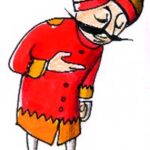

Mascots help the brand engage better with its consumers
- They can be de facto brand spokespersons. Mascots can have real time presence in sociosphere, sharing, commenting, reacting and interacting with consumers all across.
- Mascots are more flexible than other brand assets and identifiers such as logos, colors and fonts. They can speak different languages, dress for the occasion helping brands localize and customize messages. Take on multiple avatars!
- The mascot can be a brands promoter at the point of sale. Driving recall, reinforcing the brands core values and even delivering a sales pitch.
- Brand ambassadors may switch or cease to be relevant but mascots will always belong to the brand.
- The sheen of the brand may diminish over time but mascots are ageless. Sometimes even out surviving the brand.
Mascots needn’t necessarily be cartoons, caricatures or animated characters alone. They can be and are human too. Many brands have successfully created characters and used them in communication across multiple touch points.
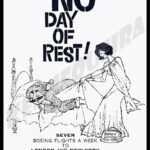
Here are a few brands and their mascots that according to me have served or are serving their brands superlatively across TV commercials, radio spots, print ads, hoardings and web films.


Look forward to your thoughts.
E.Q. -Brands that tugged at your heart

“I’ve learned that people will forget what you said, people will forget what you did, but people will never forget how you made them feel.”
Maya Angelou
This quote has been and continues to be a guiding factor for me as a marketing professional. It can be universally applied to not just to interpersonal situations but to communication as well. If the intent of all brand communication is to create positive impressions that at some point result in a purchase decision in favour of our brands and products then, how it makes one feel on reception is of paramount importance.
 If one were to look at brand messaging and how consumers would “warm up” to the brand there are 4 distinct levels. Communication that talks about the product and its features alone would get the coldest response. The prospects improve to lukewarm once you move from the I to the you and I space where there is talk of benefits. The slightly warmer zones are where brands cater to the status and social needs. The hottest zone is where the brand creates a connect with the consumer at an emotional level.
There are dozens of research papers that define and describe the range of human emotions putting them into positive and negative buckets. Marketers have for long argued whether to go the factual, cut and dry rational way when they communicate or to appeal to & arouse the consumer’s emotions to get them across the line.
 Derrick Daye at the Blake Project in his article 5 Drivers of Brand Insistence says that the ultimate goal of brand equity building is to move the consumer from brand awareness to brand insistence. He opines that there are five elements that drive a consumer to insist upon a particular brand to meet his or her needs – brand awareness, accessibility, value, relevant differentiation, and emotional connection.
That being said a brand cannot just churn out arbitrary sentimental stuff that has no connect with what they do or offer.
One question that needs to be answered is whether the communication conforms to or breaks the pattern. In a category where emotions are the norm another communication would not break clutter. Also, does the communication provide adequate proof points to the consumer? Remember it’s not enough to get the consumer all mushy, eventually all communication needs to translate into strengthening the brand.
Here’s a compendium of TVCs that caught my eye. They straddle a host of emotions and categories. Interesting to note how many of these brands are leaders in their categories. Some of them go beyond emotion and deliver a strong brand message whilst others definitely touch your heart yet fail to do much else.
[youtube=http://www.youtube.com/watch?v=HkuKHwetV6Q&list=PLdEKkPjjrZSfQD04FfQWvBnzMTb7DjfzM]
To leave your thoughts use the voting buttons J
[polldaddy poll=8210912]
To Be Or Not To Be: Should Brands Reinforce or Shatter Stereotypes?
 The germ of this article lies in the recent flutter that an interview by the CEO of a cola major has caused in the sociosphere [1] [2]. This post however, is not to express an opinion either for or against the views put forth but to raise a related relevant question. The question is with regard to stereotypes and the role brands and brand communication should be playing. If at all brands and brand communication have any culpability/responsibility with regard to reinforcing or breaking stereotypes.
As marketers sending out communication for and on behalf of our brands we rely heavily on our (collective/organizational/gut/experience) understanding of the consumer. The endeavor always is to gain and convert that killer insight into brilliant communication that hits home. It is for the keen eye to distinguish and separate the wheat from the chaff.
Brand communication over the years has tended to rely heavily on the stereotypes that society offers. These may be discrete pieces of communication from different brands but to consumers/audiences expose to this communication it is a single mass from which certain subliminal messages emanate albeit without being planned.
To explain my point and to connect back to the germ of this article I shall take the example of the stereotypes about women that get or got reinforced. Now it is important to note that each brand is doing its own bit and approaching it based on what its insight is about its category and consumer. However, they collectively end up reinforcing a certain image.
Take the commercials that were being aired on India television during the late eighties, even well into the nineties. The stereotype that was being reinforced was that of the Indian woman as the dutiful housewife. It was her responsibility to keep the utensils, clothes sparkling clean. She needed to ensure ends were met, kids were fed, even cook food good enough to keep the husband’s boss happy. As if all that were not enough she needed to look good and smell good for her husband when he came back home.
http://www.youtube.com/watch?v=PMYFCb_c0A0
Sign of times well not really, considering it would be round about this time that the Indira Nooyis, the Chanda Kochhars, the Naina Lal Kidwais and the Kiran Mazumdars were climbing rungs of the corporate ladder.
The India of the late eighties and nineties did not exist in a bubble. It was simply taking a leaf out of or getting “inspired by” communication of that was being aired elsewhere in Europe and America. It was taken to a satirical level in the book (and later on the movie adaptations) The Stepford Wives by Ira Levin.
There have been examples of brands attempting to break stereotypes as well. An example that comes readily is a campaign by a personal hygiene brand when they chose to dump the veiled, almost apologetic “Woh zaroori din” (translated: “those important days”) approach and said it like it is.
It’s not as if women alone have been subjected to such stereotypes. Men have been brought up with their own set of expectations to live up to. Advertising is replete with exaggerated versions of males as performers, winners, saviours of the world etc. etc. Gender stereotypes apart, brand communication has at times relied on race, colour and ethnic stereotypes as well. These were perhaps found acceptable in the times they were aired.


Ad creators and brand managers across the world will continue to deal with their existential dilemma of reinforcing or breaking stereotypes that form in our society.
So who really is to blame if one feels obligated to conform to these stereotypes? If it is indeed the society then the answer at some level is I, Me and Myself.
To close a few lines penned by the Bard of Avon from Hamlet.
“To be, or not to be? That is the question—
Whether ’tis nobler in the mind to suffer
The slings and arrows of outrageous fortune,
Or to take arms against a sea of troubles,
And, by opposing, end them?”
Deep Impact: Out of Home…Out of the Shadows!
 Out of home media for years has been meted out step motherly treatment by planners and brands alike. Often receiving spill-over/ left-over campaign budgets and more than often facing the axe when there is a crunch. The fact that there are no universally accepted measures and questionable audits haven’t helped cause either. Planning and measurement challenges apart, till not so long ago OOH was blamed to be a passive, immobile medium. Unlike communication via traditional media that travels to or “reach” the audience, the audience has to reach the medium and therefore the communication itself.
Not a very flattering analogy, but an analogy nonetheless OOH media is the Cockroach of the media biome, it was there long before anybody came and shall remain long after everyone is gone. Staying with the concept, OOH in the past few years has evolved like no other. Having wholeheartedly embraced technology OOH today has managed to overcome a few of its handicaps and even managed to convert some of its weaknesses into strengths.
From wall painting to billboards to segment/matrix displays to screens to pods to holograms is a whole lot of evolution to boast of in one generation! OOH today is visual, audible, tangible, flexible, customizable, you name it. While measures are still an issue a significant dimension that OOH has added to itself has been IMPACT.




More and more brands led by their PR departments are venturing out and using OOH as an impact tool. The talk value of such exercises not only multiplies the “reach” by viralling on social media but also features on traditional media because of its news worthiness contributing significantly to the earned media kitty. Delivering the much required RoI the bean-counters and the “measurability” for whosoever needs to claim or declare success, in other words everyone is happy.
Whether its entire airplanes painted (or stickered) with your brand or virtual cheetahs atop cars or building projections brands are seeking “Innovation” and “Impact” with every single campaign. OOH today is not a unidirectional communication anymore. It has become an experience delivery mechanism. The tangibility of the medium and the natural ability to be “larger than life” obviously come in handy. Brands today do not just want a good communication, no not even a great communication they want awesome. OOH has emerged as the answer to how do I physically engage an audience, make them gasp and say wow! Not only that make them record, capture and share!
OOH including transit, street furniture, ambient delivers the edge brands need. No longer are they shackled by footfalls and traffic density. In a pioneering move, the Rapid Metro in Gurgaon has offered entire stations as an asset with the brand integrated into the station name!
Out of home, out of box and out of the world is new mantra in an innovation hungry world. About time the brand guys take note and ownership of this medium and pull it out of the shadows and the burden of expectations based on traditional media.
Leaving you with a personal favourite, do pardon the bias 😉
http://www.youtube.com/watch?v=SX2Gd-kqV5s
Stage Flight: The Emergence of the Confident Consumer
 There are many who believe this increasingly connected virtual world is negatively impacting social skills. People tend to talk lesser to each other all of us have become Phubbers. Kids are replacing time spent playing with other kids with their eyes glued to one of the screens. Social networking sites alleviate any guilt associated with not keeping in touch with loved ones.
While it is a lead in, this post is not to debate the case merits of the “multi-media world”. Suffice to say that there are extremely good arguments on both sides. This post attempts to reveal one such dimension or an insight.
The author believes that despite the virtual world having created these bubbles or silos that we live in, the people today are more willing to let themselves be judged than ever before.
The past decade or slightly more has witnessed the inception and growth of what are termed “reality shows” especially the talent or skill based variety. What separates one from fame and money (read success) today is not chance or opportunity, but their individual skill or talent. These shows and the advent of social networking have given wings and fuelled aspirations of millions. They have given rise to a new breed that does believes there’s a place in the spotlight for them. Whether it is singing, dancing, writing, acting, playing an instrument, cooking or for that matter something as inane as the ability to spit with precision on a target! There is a platform available to showcase ability. Opportunity today is ubiquitous.
Contests, competitions and pageants have been around a long time so what really has changed? It is the scale. The connected world has removed the subjectivity of the talent scouts and placed in the hands of the audiences. While it might not be the right way to do it, it has definitely democratized the process of selection. The opinion of the few is being supplemented with the taste of the masses. This for whatever its worth has lent itself to the perception of “fair play”.
More and more people are venturing out of their protective cocoons, unafraid what the world will say. In fact, the world is the promise and failure or ridicule, a very small price to pay. Talent and skill are just exaggerated manifestations of this insight. The gains need not always be monetary, they can be personal boosters too. The willingness to be judged is evident in every single act of in the social networking space. We put up our photographs, air our views, and share our moods all of which are being judged in real time. Likes, +1’s, re-tweets, views, comments, shares are the new determinants of success.
http://www.youtube.com/watch?v=8OcQ9A-5noM
http://www.youtube.com/watch?v=PPuJ1xRRFtQ
http://www.youtube.com/watch?v=D-qXhHCnEXY
This new found confidence transcends demographics, culture, social strata you name it. From babies to octogenarians nobody seems to have an issue with stage fright anymore. As an audience what is on view ranges from the amazing to the ridiculous. There is no such thing as infamy, popular is the bottom line.
You generate the content and put it out, the seekers of the content will gravitate towards it. The number of home-made or amateur or non-professional efforts that have viraled in the recent past are testament to this. Bloggers and twitterati with following are an integral part of digital marketing plans. Every day more and more content is put up on sites that give a platform to users. From e-books to self-produced music videos it’s all there. Every passing year talent hunts get unprecedented participation and ever increasing social footprint.
Overnight success is no longer an infrequent occurrence or a fairy tale it is expected. There are several more Justin Biebers knocking on the doors of fame.
As they say it’s not spreading your wings but courage that makes you fly!


