
Diw(Ai)i
In a fast evolving technological environment where learning models are constantly advancing and adapting, here’s a creative experiment on the festive occasion of Diwali.
I gave the following prompt on the Perplexity AI application.
“Study the style of poetry and writing of Poet and Author Sudham (www.sudhaam.com) and write 2 short poems capturing the festive spirit of Diwali as a greeting.”
Here’s the output:
Sudham Ravinutala (known as Sudhām) writes with a deeply emotive, reflective, and humanistic style that combines lyrical rhythm with soulful introspection. His bilingual poetry in Hindi and English uses everyday imagery—love, loss, time, memory, and friendship—to evoke nostalgia and quiet resilience. The tone often alternates between vulnerability and strength, blending modern free verse with a classical Indian emotive cadence. His verses are direct, heartfelt, and conversational, often closing with contemplative insight or a gentle philosophical turn.
Drawing inspiration from Sudhām’s tone and linguistic texture, here are two short poems written in his style as warm Diwali greetings:
***AI
दीपों का सवेरा

हर दीये में एक कहानी जलती है,
कुछ अधूरे सपनों की, कुछ पुरी उमंगों की।
अंधेरे को कोसने से नहीं,
उसमें रौशनी बाँटने से आती है दिवाली।
आज दिल में भी एक दिया जलाओ,
किसी भूले रिश्ते के नाम,
क्योंकि रोशनी वहीं बसती है—
जहाँ अब भी उम्मीदें जागती हैं।

***

Light in Our Hearts

In the hush before the lamps awaken,
dreams whisper in saffron glow.
Walls that once held silence
now echo laughter’s flow.
The night folds itself in gold and song— each spark a promise reborn.
May your heart, like a Diwali flame,
burn steady, warm, and strong.

***
These poems reflect Sudhām’s blend of introspection and uplifting simplicity—rooted in emotion yet carrying a modern cadence through imagery of light, memory, and humanity.
Sudham
Now, here are 2 short poems that I have penned.
दिया
© सुधाम २०१५

हर घर हर गाली हर शहर
आज सजी दीपों की असंख्य माला हैं
हर क्षण हर पहर हर दिवस
नए वर्ष का हो मंगलमय बतलाती यह ज्वाला है

हर दिल हर मन हर तन
में जागे हर्षों-उमंग की भावना
हर गृहस्थी हर कुटुंब हर समुदाय
पाए सुख-समृद्धि दिये की है शुभकामना

***


Sparkle
© Sudham 2025

This Diwali as we light our lamps
We shall carry a prayer in our heart
For our bright future and for yours
Knowing our actions play their part

May the sparkle the festive lights lend
Add to our joys and create memories
Set us forth on a prosperous path
With health as company and luck as a friend
At the end of it all whether it’s AI or just I the words are what matter and the thought that counts.
AI AI YO! Living Guilt Free with AI

Why Marketers and Professionals Should Embrace, Not Fear, Artificial Intelligence in Their Creative Processes
At the outset and on a lighter note, let me clarify I have not suddenly decided to call upon my South-Indian roots for creating the title. The expression “AI AI YO” is however inspired by this much propagated tripe – a caricatured representation of exasperation by a typical South-India character in Hindi movies. Having established that there is a need to reframe narratives. Let’s speak about AI.
The Era of Guilt-Free AI: Reframing the Narrative
For decades, technological innovation has marched hand in hand with professional creativity. From the printing press to Photoshop, each new tool has sparked debate and, sometimes, unease: Does this diminish my own effort? Does it erode the authenticity of my work? Today, with the proliferation of artificial intelligence (AI), these questions have echoed louder than ever, especially among marketers and other professionals whose work is rooted in communication, creativity, and strategy.
AI is transforming how presentations are built, scripts are drafted, videos are produced, and graphics are designed. Yet, a surprising undertone of guilt persists—an internalized doubt that using AI somehow cheapens the value of one’s work. This article makes a bold case: Marketers, and indeed all professionals, should not feel ashamed of using AI. Instead, they should embrace it as the latest in a long line of tools designed to amplify, not replace, human ingenuity.
AI as a Tool, Not a Threat
Reframing Perception: From Magic to Machinery
The core of the AI guilt complex lies in a misunderstanding of what AI actually is. It is not a mystical replacement for human talent, nor is it a shortcut that undermines authenticity. At its most fundamental, AI is a tool—sophisticated, yes, but a tool nonetheless.
Consider the spell-checker: When it first appeared, some purists scoffed, suggesting it would erode spelling skills and diminish the art of careful proofreading. Yet today, no writer feels guilty for running a spell-check before hitting “Send.” The same applies to internet search engines, which democratized access to information, or to digital cameras, which made photography more accessible.
AI is no different. It is a tool that, when used wisely, expands the scope of what’s possible. The shame comes not from the tool itself, but from a misplaced belief that using it somehow discredits the creator’s contribution.
Historical Parallels: Every Tool Once Felt Like “Cheating”
It’s helpful to remember that every technological leap in history was accompanied by a chorus of doubts. When calculators entered classrooms, some educators worried that students would lose the ability to calculate mentally—yet calculators freed minds for deeper, more complex problem-solving. When search engines redefined research, did it make scholars “less scholarly”? Of course not. It expanded their reach and accelerated their progress.
AI joins this lineage. It is the spell-check of structure and style, the search engine of synthesis and insight. It is not a destination; it is the vehicle on the journey from concept to creation.
The Marketer’s Dilemma: Authenticity vs. Automation
The Fear of “Losing One’s Voice”
For marketers, the anxiety about AI can be especially acute. Marketing is, at its heart, about connection—about telling stories that move audiences, spark action, and build relationships. The fear is that AI, with its data-driven logic, will produce content that is soulless, generic, or disconnected from the authentic voice of the brand.
But this fear is misplaced. AI does not think for you—it only thinks with you. It is a collaborator, not a ghostwriter.
Iterative Interaction: AI as Creative Partner
The best results come not from blindly accepting AI’s first output, but from engaging with it iteratively. The professional reviews, refines, and reimagines what AI delivers—injecting nuance, insight, and personality. AI can propose a bullet-point outline for a product launch, but only the marketer can adapt it to reflect the brand’s personality, market context, and audience needs.
This human-AI loop ensures the end product is both efficient and effective—saving time on mundane tasks and leaving space for the uniquely human touch.
AI in Practice: Enhancing Every Stage of the Creative Cycle
Presentations: From Blank Slides to Compelling Narratives
Anyone who’s stared at a blank PowerPoint knows the agony of beginning. AI can break the ice—generating frameworks, suggesting data visualizations, and even drafting talking points. But the professional curates, edits, and polishes, ensuring the final presentation is persuasive, purposeful, and on-brand.
Scripts and Content: Drafts that Spark, Not Replace, Creativity
Whether scripting a commercial, drafting an email campaign, or outlining a webinar, AI can generate first drafts that save hours of effort. But these drafts are starting points. The marketer adapts language, tunes messaging, and adds the emotional resonance that only a human can provide.
Video Production and Graphics: Lowering Barriers, Not Standards
AI-powered video and graphic tools democratize high-quality content creation, especially for small teams or solo professionals. AI can automate editing, suggest color palettes, or even generate animations. But vision and intent come from the creator. The professional uses AI as a brush, not a blueprint.
AI and Human Involvement: The Necessity of Intervention
Guardrails and Guidance
AI is only as good as the hands that guide it. Blind automation leads to generic, unremarkable output. Wise use, on the other hand, means setting clear goals, asking the right questions, and editing with intention. AI accelerates the “grunt work,” but judgment, values, and vision remain human responsibilities.
This interplay is especially vital in marketing, where context, emotion, and cultural relevance drive results. AI learns from patterns, but humans recognize meaning. The magic happens at the intersection.
Ethics and Accountability
Another reason for human involvement is ethics. AI can inadvertently perpetuate biases or misinterpret sensitive topics. Professionals must review, refine, and take responsibility for the final product. This accountability is the hallmark of good practice—regardless of the tool used.
Shedding the Stigma: Guilt-Free AI Adoption
Transparency and Professional Pride
There’s no shame in using AI—only shame in failing to use it wisely. Transparency is key. Just as writers acknowledge spell-check or researchers cite search engines, professionals should feel free to disclose their use of AI. In fact, this openness can foster trust, demonstrating a commitment to quality and efficiency.
Skill, Not Substitution
Using AI does not diminish professional skill; it demands new skills. Marketers and professionals must learn to ask better questions, interpret nuanced answers, and curate large volumes of information. AI elevates the role of the professional from laborer to orchestrator.
Looking Forward: The Empowered Professional
Efficiency Meets Effectiveness
When marketers and professionals embrace AI without guilt, they unlock unprecedented efficiency. Routine, repetitive tasks—research, formatting, basic drafting—are handled in moments, freeing time for strategic thinking. AI augments capabilities, enabling individuals and teams to do more, faster, and at a higher level of quality.
Endless Opportunity for Innovation
Far from stifling creativity, AI creates new opportunities for experimentation. Marketers can rapidly prototype campaigns, test messaging, and personalize content at scale. Professionals in other fields—law, healthcare, education, engineering—can automate routine work and focus on impact.
A Human-Centric Future
The greatest promise of AI is not that it replaces humans, but that it empowers them. The professional of the future is not the one who shuns technology, but the one who integrates it thoughtfully into their craft. This is not surrendering creativity; it is amplifying it.
Conclusion: Embracing the Guilt-Free Creative Future
AI is, and always will be, a tool. Like every tool that came before it, AI’s value lies in how it’s used—not in what it threatens to replace. Marketers and professionals should view AI as they do spell-check or search engines: an enabler, not an eraser, of human creativity.
By embracing iterative interaction and maintaining appropriate human involvement and intervention, professionals can ensure their work is not only efficient, but also effective, relatable, and authentic. Those who harness AI wisely will lead the way to a future where creativity knows no bounds—and where guilt has no place.
The future is brighter, more efficient, and more imaginative than ever.
So, use AI—freely, proudly, and without an ounce of shame. This is the time for AI AI YOU! The world is waiting for what you’ll create next.
PS & DISCLAIMER:
This article has been drafted & created with the help of AI. Now does that sound like something I have written about, and you have read before? Good luck figuring it out. Either way, I still have undeniable IP rights on this content. Do leave your thoughts in the comments or DM.
Building Brands Intelligently in an Era of Artificial Intelligence
What is a brand? What does it take to build one? Who builds the brand – the marketing team, the product or service by virtue of its delivery of promise? Assuming one can be built is it possible for it to transform?
Questions that would make the best of marketers and gurus pause to reflect and collect their thoughts before they ventured an opinion.
Yes, you read that right! An opinion!! Likely a studied or considered one but opinion, nonetheless. Now, the author doesn’t claim to be an expert marketer either but sure is a passionate one. The very same passion that has brought the author to publish a post on ABVS after a long, very long time!
Most brands have a multi-layered existence that operates in a 3-dimensional space with the so-called 4th dimension being time. These layers tend to thicken over a period of existence during which every brand evolves, becoming more certain, contextual, and relevant.
Let’s understand the layers first.
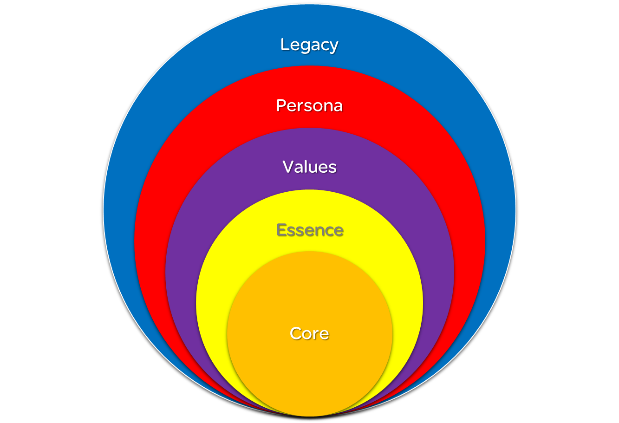
The Brand Construct - The innermost part (but naturally) is the Core of the brand. The core, as the word is defined in the dictionary, is the part that is central to the existence of the brand. The core of a brand is not unlike the calling that we humans oft struggle to find.
The questions that need answers are what am I about? What do I stand for?
The brand like all of us may well spend its lifetime trying to answer these questions. Also, much like us humans the brand also contends or grapples with these questions after having been in existence for a while. Very rarely, almost never is a brand born ready with answers to these questions. Greater understanding of this shall emerge when we look at the 3 dimensions of a brand’s existence.
- The next layer is the brand’s Essence. This is the layer that defines the playground for the brand or articulates the stage that the brand performs on.
The core and the essence of the brand often are to be articulated for and understood more by those who build it. The outcomes of doing so manifest in the layers that surround.
- The third layer is the one where the brand starts becoming more lifelike as its starts defining its own principles and standards of behaviour. Values give a window to and answer what drives or motivates a brand.
- Persona is the fourth layer of the brand. This is the layer that starts giving the brand a voice; answering the questions what do I say and how do I say it?
- Legacy is the outermost layer, the one that is all about the impact. What stays behind after you figured out your calling, performed on the stage, demonstrated what drives you and said what you wanted to the way you wanted say it.
Individually all the above are just words but collectively, they make an entity. One that is felt, seen, has a personality, stands for something and yes, gets talked about – a BRAND!
Before we move on to the dimensions of a brand’s existence it would be prudent to understand what we talked about with the help of an example.
The author mulled many different ones before settling upon BMW.
In sync with the times yours truly resorted to ChatGPT to “Describe BMW as a brand” (refer screenshot).
The answer that ChatGPT put forth is what this author shall use to build his theory of brand construct.
Sidenote: At this point, it makes sense to reiterate that the purpose of this article/post is to evoke/stimulate thought hence agreements and disagreements, mild or vehement are welcome. Please do leave your thoughts in the comments.
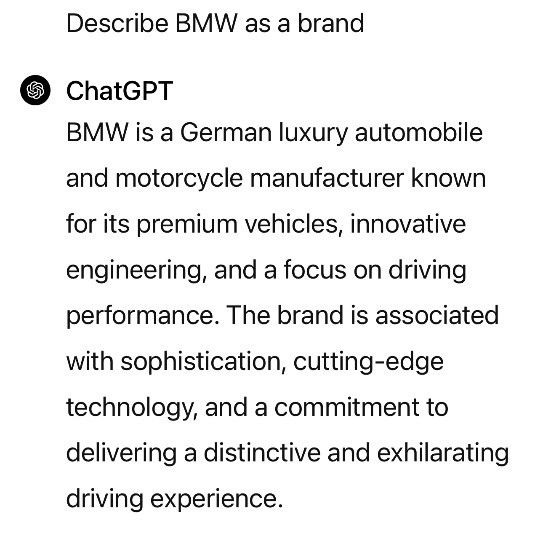
The CORE of brand BMW is “engineering”. When you start with an aircraft engine and then move to motorcycles and automobiles innovation is a given and therefore the ESSENCE of the brand. The VALUES of brand BMW are described by their “focus on driving performance”. BMWs ready association with “sophistication and cutting-edge technology” are indicative of its PERSONA. Finally, the brands “commitment to delivering a distinctive and exhilarating driving experience” is bound to be its LEGACY.
Overtly simple in retrospect? Not really, it has taken over a 100yrs of the brand being in existence for it to have the ability to be summarized so succinctly.
Which brings us to the dimensions of that hopefully, courtesy all that we have talked about explain themselves on their own.
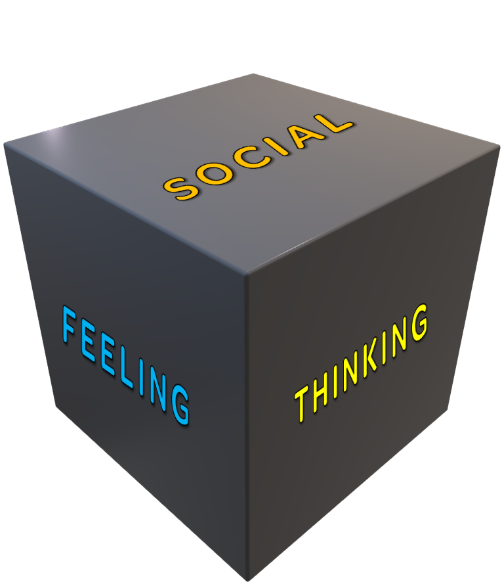
Nonetheless, the 3-dimensional space that all brands operate in are as follows:
- Feeling
- Thinking and
- Social
Time speaks for itself as the 4th dimension.
Now the FEELING dimension is all about how a brand makes one feel. It is the tangible, experiential aspect of the brand. Continuing the BMW example. “Sheer driving pleasure”
The THINKING dimension delves into the evocative and subliminal aspects of the brand viz “innovative” and finally the SOCIAL dimension is projective and provocative – “sophistication/luxury/premium”.
All of which need TIME to build, consolidate and get entrenched into the psyche of the audience.
Summing up, a brand is so much more than a name that we choose.
A brand is the sum total of the experience that it delivers, the problems it helps solve, the job it gets done, the way it makes “me” feel, the way “you” see me, and the way the “world” shall remember the brand, you and me for having created and consumed it.
All of that, through its 5 layers and 3-dimensions!

